Done Right Kitchen Hood & Fire Safety
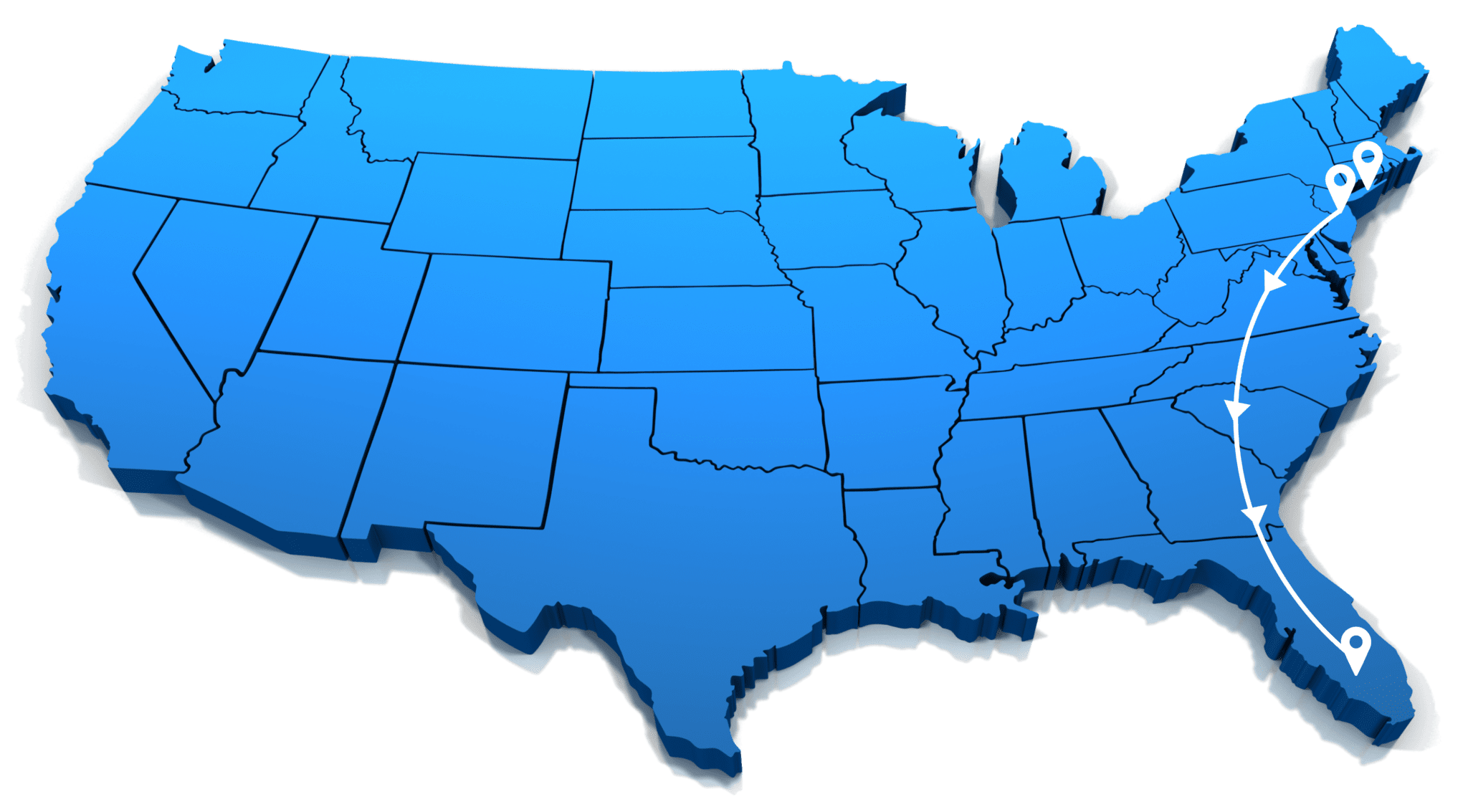
- NEW YORK • NEW JERSEY • SOUTH FLORIDA
RESTAURANT HOOD
CLEANING
DONE RIGHT!
From New York to Florida, Done Right Hood & Fire Safety are your Complete Certified restaurant and commercial kitchen hood cleaning experts!
FOR MORE THAN 1O YEARS
Restaurant Hood Cleaning From New York To Florida
We’ve been providing restaurant hood cleaning for so long, there really isn’t a commercial kitchen that we haven’t already cleaned. Restaurants, hospital cafeterias, schools, universities, nursing homes, business campuses at Amazon, cruise ships to even boats, government offices and more.
RESTAURANT HOOD CLEANING
Deep power washing to keep your restaurant compliant.
POWERFUL GREASE TRAP CLEANING
Professional grease trap cleaning & waste oil removal.
HOOD DESIGN & INSTALLATION
Complete new hood fabrication meeting all NFPA 96 standards.
ELECTROSTATIC PRECIPITATORS
Installation, routine service, cleaning & repair.
Now Offering Financing for New Installations
Get the systems you need without the upfront cost. Fast approvals, flexible plans, and zero delays in service.
RESTAURANT HOOD CLEANING TO KEEP YOUR BUSINESS SAFE
Done Right is not just our name, it’s the way we do business. From commercial kitchens at Amazon and Facebook to restaurant kitchens at Tacombi, Five Guys, Tavern on the Green and much more. Kitchen & cafeteria managers rely on Done Right Hood & Fire Safety to inspect, provide comprehensive restaurant hood cleaning, maintaining their kitchen exhaust and fire suppression systems.
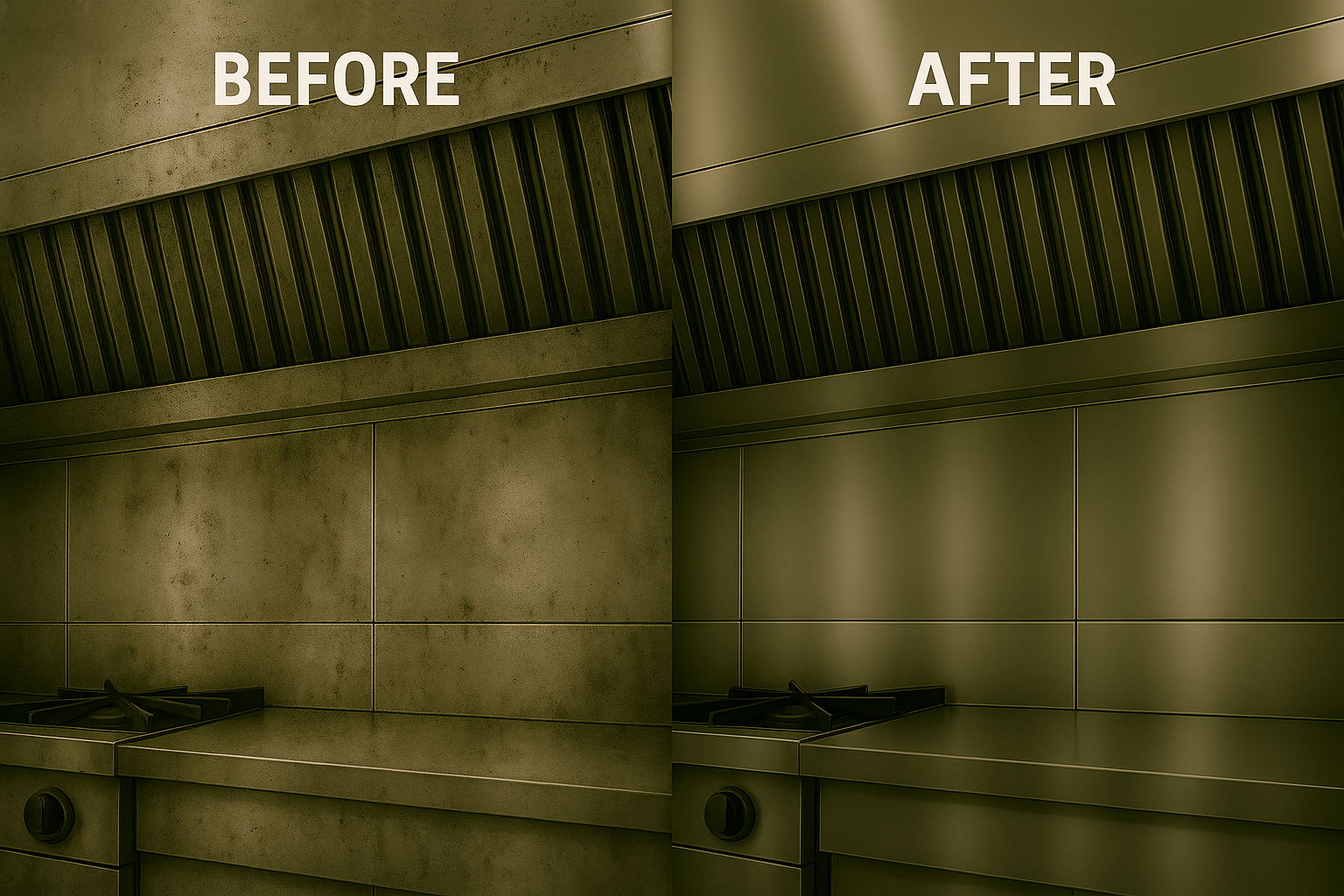
Our simple and transparent customer relations system makes regular service easy for you and insures we are available to meet your needs. Through our customer portal you will receive updates, before and after images and have access to reports on demand.
COMMITTED TO SERVICE
THOUSANDS OF SATISFIED CUSTOMERS
CUSTOMER RECOMENDATIONS:
OUR MOST VALUED COMPLIMENTS
CERTIFIED RESTAURANT HOOD CLEANING
MEANS YOUR KITCHEN IS FREE OF VIOLATIONS & FINES
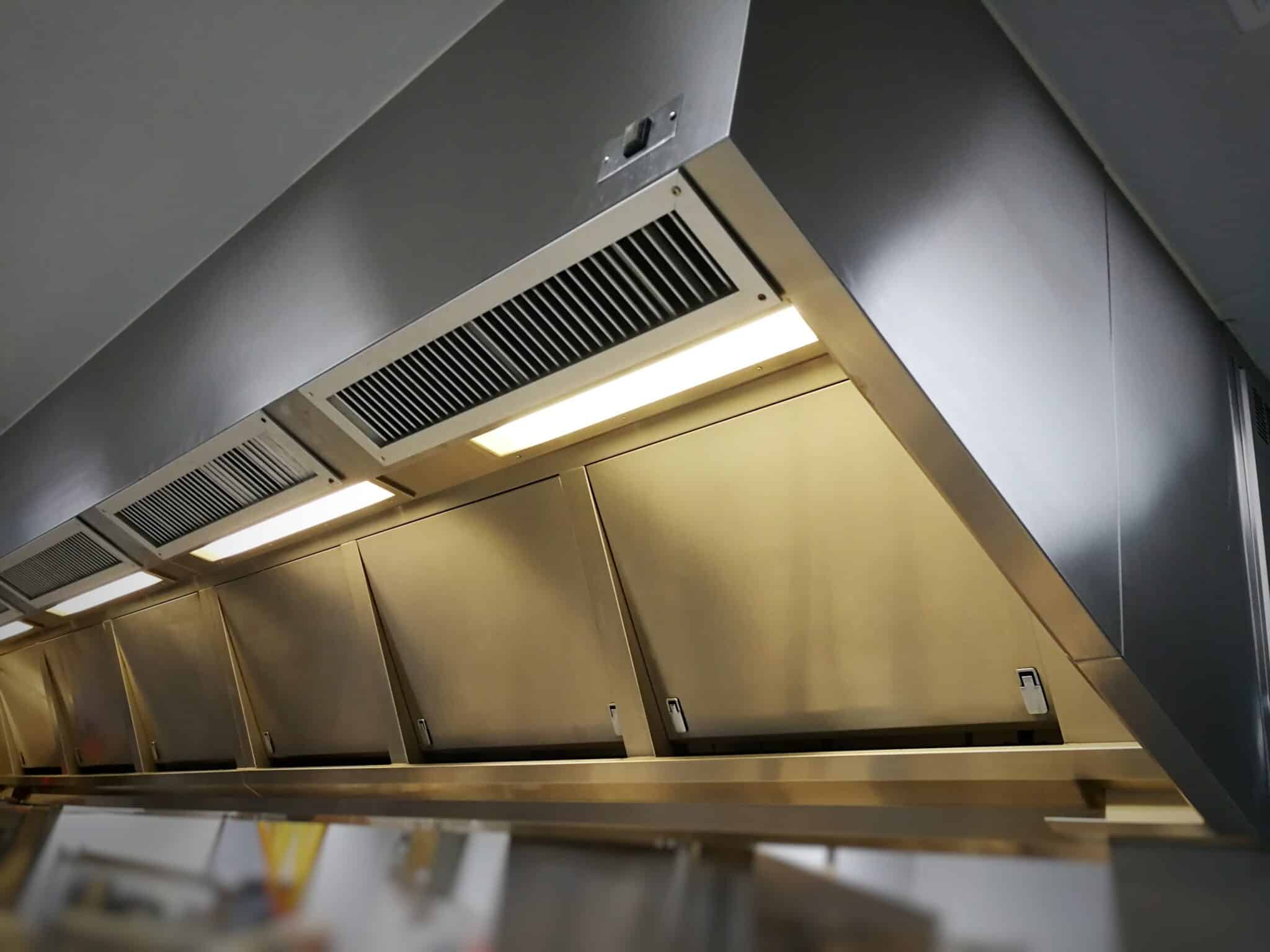
POWER WASHED & CLEANED TO THE BARE METAL
With commercial grade power washers and de-greasers. We give you full transparency through the whole process.
Most kitchen exhaust cleaning companies clean by hand, which only gets you so far. Done Right crews use industrial strength power washers, steam cleaners and de-greasers that get deep into your hoods and ducts thoroughly and safely cleaning your entire exhaust system. We don’t just clean the surface areas, but deep into your ducts, blowers, fans and hard to reach areas.
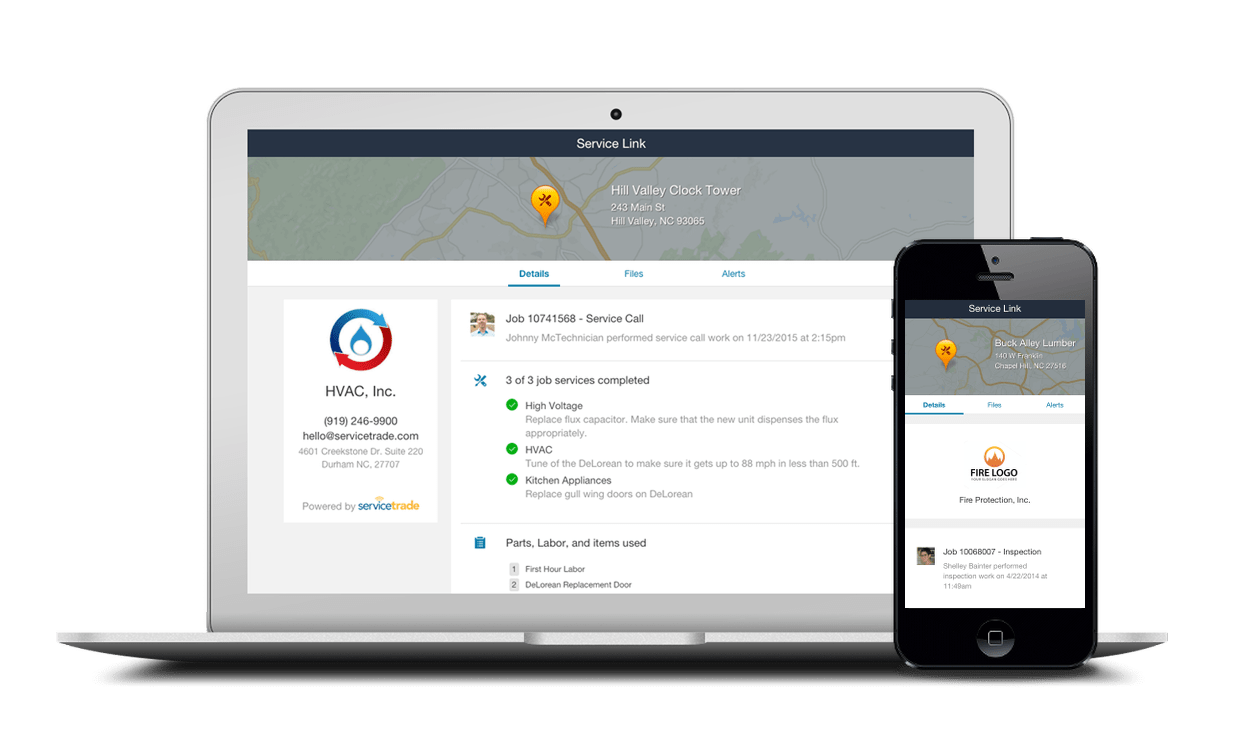
DONE RIGHT IS MORE THAN JUST A SLOGAN
With live updates and comprehensive quality control, you see first hand that it’s Done Right.
We ensure quality through Service Link, providing a detailed report with before and after pictures. All images are time-stamped, showing clean hoods, ducts, access panels, blower and the blower blade, inside and out. Our transparency makes us fully accountable for everything we do. Afterward, all debris is hauled away, leaving your kitchen clean and ready for business.
THE DONE RIGHT DIFFERENCE!
What makes Done Right Different? It’s more than just a name. It’s who we are. It’s in the values that drive us to provide valuable experience and service to our customers.
It means that we are reliable, getting it Done Right the first time, every time. It means that we have integrity, listening to our customers to solve problems. It means that we are guiding and supportive. We are honest and responsive. And we are transparent, delivering unmatched service.
MORE THAN A NAME
IT’S WHO WE ARE
ON THE IMPORTANCE OF BEING CERTIFIED
Have violations? Done Right is certified with the local authorities to remove your violations and get you in compliance again.
To get your violations removed, we need to provide a comprehensive inspection of your commercial kitchens hood. We’ll clean, inspect and even service areas that need it. You’ll then get the proper paperwork to remove your violation. In addition, we will get your violations removed and even file the paperwork for you if you’d like.
Our regularly scheduled cleanings will make sure you stay clear of further violations and your kitchen stays open for business.
Done Right is certified and cleans your restaurants exhaust hood to NFPA 96 standards. With first-hand knowledge of new technology and code changes our priority is providing customers with quality, professional service.
We’ll Keep your exhaust system clean and compliant with all local regulations.
OUR SPECIFIC CERTIFICATIONS
All our crews bear local Certificates of Fitness. We also have a number of other certifications.
FDNY P64 Commercial Kitchen Exhaust System and Precipitator Cleaning
FDNY F60 Fire Guard/Torch Operations
FDNY G60 Contractor Use Flammable Gas Cutting/Welding
FDNY W96 Citywide Service Portable Fire Extinguisher
NYC DOB Local Law 52 – Supported Scaffold User Certification
NYC DOB Local Law 52- 32 Hour Support Scaffold User Certification
NYC DOB Suspended Scaffold Safety Training User Certification
Nassau County Hood Duct Installer # 9977425078
Nassau County Kitchen & Exhaust Cleaning
New York City DOB Certified 32 Hour Rigging Certification
New Your City DOB 8 Hour Confined Space
HAD A FIRE? WE’LL GET YOU BACK OPEN, FAST
If you’ve been shut down due to a fire, we know how important it is to get you back open for business.
When you’ve had a kitchen fire, local agencies won’t let you open without a cleaning. Your fire suppression system will also need to be reset and re-charged. We can do all of that for you quickly so you can open back up to serve guest.
We’ll make it a priority so it gets done quickly. How fast? Pretty fast, but it depends on the extent of the damage and the size of your kitchen, but usually 4-6 hours.
HAVE MORE QUESTIONS?
We’ve got answers. Call us today to speak with a technician.
(212) 660-3232
MORE FROM OUR VALUED CUSTOMERS
“I’ve used several hood companies through the years in NYC, but I have to say that Done Right is by far the best. Whenever I have a problem or need guidance with my hood system I call and generally speak with Venus, who is incredibly professional, friendly and caring about my needs. She’s the reason I won’t use any other company in NYC”
Lynn Wilson On Google
“Coordinating with Done Right, in particular Venus has been an absolute pleasure. She and the team have assisted our restaurants on various issues. They’re always professional and prompt.”
Emily Greene On Google
“TOP OF THE HOOD CLEANING COMPANY!! Jacob and his team built and fabricated a new exhaust duct for our business in three days.
Highly recommend!!
P.S. I called other companies and got the run around very happy with Done Right it really was easy and quick to coordinate with their team.”
Alex Khaimov On Google

LEARN MORE ABOUT RESTAURANT HOOD CLEANING
How Often Should a Restaurant Hood be Cleaned?
There isn’t a one-size-fits-all answer for how often restaurant hoods need cleaning. The frequency depends on a few factors:
- Volume of cooking: Places that cook a lot, like 24-hour restaurants or fast food need cleaning more often – monthly is recommended.
- Type of cooking: Cooking with high heat or a lot of grease, like charbroiling or wok cooking, means more frequent cleaning, typically quarterly.
- Type of fuel: Wood or charcoal burning stoves require the most frequent cleaning, sometimes monthly.
Here’s a general guideline:
- Monthly: Wood-burning or charcoal-burning stoves, high-volume restaurants
- Quarterly: Above-average to high volume restaurants, cafeterias, hotels
- Biannually: Average volume restaurants
- Annually: Low-volume restaurants, seasonal businesses
Beyond these guidelines, it’s important to inspect your hood system for grease buildup monthly and have a professional clean the entire exhaust system, including the ductwork, at least once a year.
Remember, the best practice is to clean the hood as soon as it’s heavily greased up, regardless of the schedule. This can help prevent fires and keep your kitchen safe.
What are the FDNY requirements for hood cleaning in NYC?
What are the FDNY requirements for hood cleaning in NYC?
The FDNY doesn’t leave kitchen exhaust maintenance to chance. In New York City, commercial kitchens must follow strict hood cleaning schedules, documentation practices, and compliance protocols—or face fines, forced closures, and even criminal liability in the event of a fire.
Under FDNY Rule 3 RCNY §115-02, all commercial cooking operations are required to clean hood, duct, and fan systems at least once every 90 days, or more frequently depending on cooking volume and methods [NYC.gov].
Key requirements include:
Routine cleaning every 30, 60, or 90 days, depending on your risk profile (e.g., solid fuel cooking must be cleaned monthly).
Certified cleaning vendor use: Only FDNY-approved companies can perform the service.
Post-cleaning report & tags: After each cleaning, a signed report and dated metal tag must be affixed to the hood system.
Maintenance logs must be kept on-site and available for inspection at any time.
Noncompliance can trigger Class 1 violations, leading to immediate penalties or shutdowns. For many restaurants, especially high-output kitchens, booking recurring service and ensuring Kitchen Hood Cleaning is handled by certified professionals is the only way to stay ahead.
Want to go deeper? Read Understanding NFPA 96: Your Guide to Restaurant Fire Safety — it links FDNY rules with NFPA standards, inspects compliance gaps, and shows how to align your hood cleaning program with both.
What happens if you don’t clean your kitchen exhaust system?
Neglecting to clean your kitchen exhaust system isn’t just a bad habit—it’s a direct risk to your staff, your customers, and your bottom line. Grease buildup inside your hood, ducts, and fans is both a fire hazard and a magnet for costly violations.
According to the National Fire Protection Association (NFPA), more than 7,000 commercial kitchen fires occur annually, with failure to clean cooking equipment being the leading cause [NFPA].
Here’s what’s likely to happen if cleaning is skipped:
Grease fires spread fast: Grease-coated ducts act like fuel, allowing fires to travel rapidly through the ventilation system.
FDNY violations and shutdowns: In cities like New York, unmaintained exhaust systems are a common trigger for immediate Department of Buildings (DOB) or Fire Department shutdowns.
Poor ventilation hurts performance: Overworked fans and blocked ducts reduce airflow, raising kitchen temps and increasing equipment failure.
Higher insurance premiums: Insurers see dirty systems as red flags. If fire damage occurs, failure to maintain may void your claim.
For facilities that have already received a citation or are operating under scrutiny, proactive Violation Removal support can bring systems back into compliance quickly.
Complying with NFPA 96 standards is not just best practice—it’s essential protection.
What certifications are required for hood cleaning companies?
Not all hood cleaning services are created equal. In cities like New York and across South Florida, only properly certified providers are legally allowed to perform commercial kitchen exhaust cleanings—and using the wrong vendor can land you in violation.
In New York City, hood cleaning companies must be certified by the FDNY and comply with NFPA 96 standards. Some of the key requirements include:
FDNY certification: Only vendors approved by the Fire Department may legally perform hood cleaning work in NYC.
NFPA 96 compliance: Cleaning must follow the standard’s procedures, covering the entire exhaust system “from hood to fan.”
Training credentials & insurance: Technicians should have documented training, and the company should carry appropriate liability coverage.
Proper documentation & tagging: After each cleaning, the vendor should provide a signed report and affix a dated tag to the system.
Hiring a non‑certified company may lead to:
Rejected insurance claims in case of fire
Failed inspections and enforcement actions
Legal exposure if damage or injury occurs
Done Right’s Violation Removal service is often called in after unqualified vendors leave a facility out of compliance.
Want to validate the standards yourself? See NFPA’s official documentation on exhaust cleaning certification to understand the credentials that matter.
What does a professional hood cleaning service include?
A full professional hood cleaning goes far beyond surface scrubbing — it tackles grease buildup throughout your exhaust system so it meets fire‑safety standards and inspection demands.
NFPA 96 mandates cleaning “from the hood to the fan”, meaning all connected ducts, plenums, and fans must be cleaned, not just visible parts. (NFPA)
A typical full‑service hood cleaning includes:
Disassembly of filters, access panels, and removable components
Strong degreasing agents, high‑pressure washing or steam cleaning
Cleaning of hood interiors, ductwork, risers, and rooftop fan assemblies
Before & after documentation (photos, inspection reports)
Post‑service tagging and reporting to satisfy local authorities
Because Done Right also handles Hood Fabrication and design in‑house, they can clean complex layouts with confidence and restore systems that non‑fabricators can’t.
Want to go deeper? Read Commercial Kitchen Compliance in 2025: A Combination of Daily Tasks and Annual Actions to see how exhaust system maintenance fits into a full compliance strategy.
How Restaurant Hood Cleaning is Influenced by NFPA 96
Fire safety regulations, as overseen by the FDNY in New York, for example, are rooted in the local codes but also draw extensively from the national guidelines established by NFPA 96. This approach demonstrates the FDNY’s acknowledgment of NFPA’s authority in setting up effective fire prevention practices for kitchens. By integrating these standards into their regulatory framework, the FDNY ensures that restaurants in New York City adhere to both local and national safety standards.
The same is true for restaurants in New Jersey and South Florida.
It’s crucial to recognize that grease accumulation in kitchen exhaust systems is a major contributor to restaurant fires, representing around 5% of all fire incidents in the United States. Annually, these fires result in significant financial losses and personal injuries.
Research conducted by the National Fire Protection Association highlights the importance of diligent maintenance of kitchen exhaust systems. A notable study from 2017 found that proper restaurant hood cleaning resulted in a remarkable 58% reduction in the number of fire outbreaks. This data emphasizes the vital importance of a properly maintained exhaust system in safeguarding restaurants, their employees and patrons.
To learn more, read our comprehensive overview of NFPA 96.
Being Prepared for a Restaurant Hood Cleaning Inspection
Restaurant hoods are subject to regular inspections by fire code officials. To ensure that your hood passes inspection, it is important to have it cleaned regularly by a locally certified professional. In addition to regular cleaning, you should also have your restaurant hood inspected by a fire code official at least once a year. This will help to identify any potential problems before they cause a fire.
To avoid fines and kitchen hazards, businesses should schedule routine inspections of their kitchen’s equipment, electrical systems, and fire safety devices, while storing combustible materials away from heat sources. Beyond restaurant hood cleaning, make sure that all fire extinguishers are properly serviced and inspected, keep grease traps clean and properly maintained and ensure electrical wiring is properly maintained.
In 2021 there were over 5,000 restaurant fires that caused over $172 Million in damages. By following these simple tips, New York City, New Jersey and South Florida restaurants can keep their kitchens safe and compliant, and protect themselves from costly fines.
Maintaining Your Restaurant Hood Between Professional Cleanings
Proper restaurant hood cleaning by kitchen staff is crucial for preventing fire hazards and ensuring optimal airflow. Here’s how to keep yours looking and working great, even between professional cleanings:
1. Wipe down the hood with a degreaser daily.
- Use a degreaser specifically designed for kitchen surfaces, such as stainless steel cleaner or a homemade solution of vinegar and water.
- Apply the degreaser to a microfiber cloth and wipe down the entire hood, including the bottom, sides, and back.
- Pay special attention to areas where grease tends to splatter, such as around the knobs and controls.
2. Remove any spilled grease immediately.
- The longer grease sits, the harder it is to remove.
- If the grease has hardened, you can use a scraper to gently remove it.
3. Clean the baffle filters regularly.
- How often you need to clean the baffle filters depends on how often you use your range hood. Generally, it’s a good idea to clean them at least once a month.
- Some filters can be cleaned in the dishwasher, while others need to be soaked in hot, soapy water.
- Once the filters are clean, be sure to dry them completely before reinstalling them.
By following these simple tips, you can maintain a clean, efficient, and fire-safe range hood that adds safety to your kitchen. Remember, regular upkeep between professional cleanings is key to an efficient and safe exhaust system.
To learn more, read our comprehensive guide to restaurant hood cleaning.
Understand the Risks of Improper Restaurant Hood Cleaning
A dirty restaurant hood is not just an eyesore; it’s a fire hazard that can have devastating consequences for your business and the safety of your staff and customers. Grease buildup in your hood can easily ignite, leading to a raging fire that can engulf your kitchen, spread to other parts of your building, and even cause structural damage. According to the National Fire Protection Association (NFPA), approximately 7,000 restaurant fires occur annually, causing an estimated $154 million in property damage.
In addition to the immediate risk of fire, improper restaurant hood cleaning can also compromise indoor air quality, leading to health problems for your staff and customers. Grease particles can clog ventilation systems, trapping harmful fumes and smoke inside your kitchen. These fumes can cause respiratory problems, headaches, and even nausea. Prolonged exposure to these fumes can lead to more serious health conditions, such as asthma and bronchitis.
Beyond restaurant hood cleaning, preventing kitchen fires requires a comprehensive approach that includes regular equipment inspections, staff training, and proper storage of flammable materials. Implementing a strict no-tolerance policy for unsafe practices is crucial.
Did you know, a significant number of restaurant fires are caused by human error? Most often, there were clear warning signs that had been ignored. In addition to taking the necessary steps to keep your restaurant hoods and exhaust systems clean, educate your staff about the risks and enforce safety protocols. By taking a proactive stance, you can significantly reduce the likelihood of fires and associated local fines.
GET YOUR ESTIMATE TODAY
Loading your form...
