Fire Suppression Systems Compliant With Local Codes and NFPA Standards
Fully Compliant & Reliable Restaurant Fire Suppression Systems So You Can Stay Focused on Your Business, Your Guests and What You Do Best
Fully Compliant & Reliable Restaurant Fire Suppression Systems So You Can Stay Focused on Your Business, Your Guests and What You Do Best
We’ll Do for Your Kitchen What We Do for Theirs


Meet all NFPA and city requirements with a solid fire suppression system for your commercial kitchen.
If you have a commercial kitchen, then you’re required to have a UL300 wet chemical fire suppression system. Whether your kitchen is a restaurant, cafe, nursing home, school campus or government cafeteria, you must be in compliance.
Done Right provides complete fire suppression service in-house through our Metro Fire Control brand, ensuring your system works when it’s needed most. We’ll make sure your required semi-annual testing is scheduled and insure everything is up-to-date and to code.
The cost of installation and inspection depends on the the set-up of your system, size of kitchen and other factors so give us a call at (212) 660-3232 and we’ll get you an estimate.
When you’re busy running a business, you don’t want to get bogged down with things that don’t help you improve the performance of your kitchen. That’s where we come in.
New York City, New Jersey & South Florida kitchens can be a well-choreographed machine or a chaotic jungle where hazards lurk. You’ve got cooks filling orders, waiters and waitresses moving about and staff doing their part. It’s not uncommon for mistakes to be made or safety overlooked. And you can’t always be there to make sure all precautions are made.
You need a fire suppression system that not only ensures the safety of your staff and customers, but is approved and in compliance with all local codes and fire department regulations. With the right system, fire suppression is one thing you won’t have to worry about.
We’ll make sure that you pass all inspections and are cleared by the FDNY. You’ll meet all city and state regulations concerning your kitchen fire suppression.
Done Right Hood and Fire Safety does not only clean, design and fabricate restaurant kitchen hoods, but our partnership with Metro Fire Fire & Safety, insures your fire suppression system passes inspection and meets all city codes.
Get in full compliance with UL 300 as well as FDNY codes and building regulations. Meet NFPA standards with regular maintenance and cleaning for all NYC restaurants, cafeterias, hotels, schools, hospitals, nursing homes and more.
For new locations or existing restaurants, we’ll make sure your kitchen is fit with the right suppression system, regardless of the challenges.
If you have a new location and need an installation, we’re the ones to call for that as well. Done Right will fabricate your kitchen hoods while Metro Fire & Safety will install the fire suppression system so everything is installed professionally and works cohesively.
All fire department and building department filings, approvals and permits will be submitted for you and you’ll receive a fire department letter of approval. Done Right and our partners will insure you receive the full kitchen compliance package so when your kitchen is finished, you’ll be ready to open.
Get Your Free Estimate
or Get Answers to Your Questions

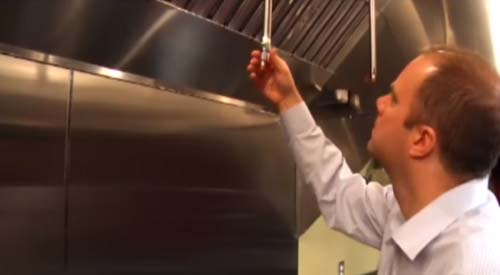
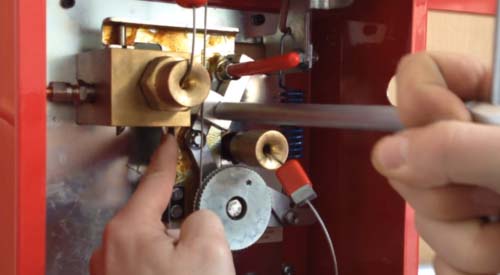
Restaurant fire suppression systems, particularly those in kitchens, require a two-pronged approach to maintenance:
Regular Inspections by Licensed Professionals:
NFPA 96 recommends bi-annual (every six months) inspections by a qualified fire suppression company. Professionals, like those at Done Right Hood & Fire Safety will thoroughly examine your system’s various critical components, ensuring that they’re all in proper working order. We also check for any damage, leaks, or obstructions that might hinder operation.
In-house Maintenance by Restaurant Staff:
Monthly Visual Inspections: Beyond having your fire suppression system inspected by professionals, your staff should conduct monthly visual inspections to identify any obvious issues. This includes checking for:
Finally, it’s important to remember that fire suppressions need to be cleaned to ensure they remain functional. The frequency of cleaning depends on the volume of cooking you do.
In the United States, nearly all restaurants and commercial kitchens are required to have a fire suppression system. The specific requirements are outlined in the National Fire Protection Association (NFPA) code 96 [NFPA 96].
Here’s a breakdown of which kitchens need a fire suppression system:
In short, it’s very likely that any commercial kitchen will need to have some form of fire suppression system. Which means that the remaining variable is which type of system is best for your kitchen’s specific needs in order to maintain compliance with local codes and regulations.
Every restaurant or commercial kitchen relies on its fire suppression system as the last line of defense against grease fires. But the system only works as intended when it’s serviced on time — and properly documented.
The National Fire Protection Association (NFPA 96) requires that fire suppression systems in commercial cooking operations be inspected and serviced at least every six months by a certified technician (NFPA.org).
Here’s why this matters:
For facilities managed by Done Right Hood & Fire Safety, inspections and cleaning are handled entirely in-house. This integrated approach ensures every fire suppression system is serviced alongside connected systems like Hood Fabrication and exhaust cleaning — helping prevent costly compliance issues down the line.
Keeping a six-month inspection schedule is one of the most effective ways to stay compliant and protect your staff, property, and business continuity. Learn more about NFPA 96 standards and inspection requirements directly from the NFPA.
A fire suppression system is designed to stop a kitchen fire before it spreads. But when these systems fail, it’s almost always due to preventable issues — poor maintenance, incorrect installation, or neglecting inspections.
According to the National Fire Protection Association (NFPA), cooking equipment is responsible for nearly 61% of all restaurant fires, and system failures or lack of maintenance are leading contributors to their spread (NFPA.org).
The most frequent causes of suppression system failure include:
Improper maintenance – Grease and debris can block discharge nozzles, rendering them useless when activated.
Expired or discharged chemical agent cylinders – Systems can’t extinguish a fire without the correct amount of suppressant agent.
Altered or replaced cooking equipment – Changes to the layout without reconfiguring the suppression system leave gaps in coverage.
Damaged or disconnected detection lines – Heat sensors and fusible links are critical to triggering the system; neglecting these often leads to failure.
Untrained staff – Employees who don’t know how to manually activate the system or report maintenance issues increase overall risk.
Preventing these failures requires a consistent inspection schedule and expert servicing. Done Right Hood & Fire Safety manages every phase — from system design and installation to semiannual inspections and Violation Removal — ensuring systems meet all FDNY and NFPA 96 requirements.
System reliability is only as strong as the attention it receives. Kitchens that partner with fully certified providers drastically reduce the odds of suppression failure and costly downtime. For authoritative guidance, review the full fire safety maintenance recommendations at NFPA.org.
Commercial kitchens in New York City operate under some of the most rigorous fire safety standards in the country. At the core of these regulations is NFPA 96, the national benchmark for ventilation control and fire protection of commercial cooking operations.
NFPA 96 compliance violations account for a significant portion of restaurant shutdowns and fines issued by the FDNY, which enforces local fire codes modeled directly on NFPA standards (NYC.gov).
Here’s how NFPA 96 affects kitchens across NYC:
Staying compliant often involves more than meeting NFPA 96 standards — it means coordinating with city-specific requirements. Done Right Hood & Fire Safety streamlines this process by managing inspection scheduling, documentation, and system testing alongside related services like Hood Fabrication and Fire Extinguisher Services.
For the most current version of NFPA 96 and detailed requirements, visit the National Fire Protection Association or consult the NYC Fire Department for local enforcement updates.
Insurance companies view a commercial kitchen’s fire suppression system as a critical safeguard — and a major factor in determining premiums. A properly installed, code-compliant system reduces the likelihood of property loss, downtime, and claims.
According to the National Fire Protection Association (NFPA), over half of all restaurant fires start in cooking areas, yet many facilities operate with outdated or incomplete suppression systems (NFPA.org). Insurers reward proactive risk reduction, often offering premium discounts of 10–20% for verified, compliant systems.
Why new installations can reduce insurance costs:
Insurance carriers want assurance that kitchens are managing fire hazards responsibly. Partnering with Done Right Hood & Fire Safety — which designs, fabricates, and installs systems entirely in-house — demonstrates a commitment to safety that insurers recognize favorably.
For verification of recognized fire protection standards, see the NFPA’s commercial cooking operations guidelines or consult your insurer’s commercial risk requirements.
Not all fire suppression systems are built for the same hazards. In commercial kitchens, the difference between wet and dry chemical systems determines how effectively a fire is controlled — and how safely operations can resume afterward.
Wet chemical systems are designed specifically for commercial cooking environments. They use a potassium-based liquid agent that reacts with hot grease to form a soap-like foam, cooling and smothering the fire while preventing re-ignition. Dry chemical systems, by contrast, use a powdered agent to interrupt the chemical reaction of combustion, making them ideal for industrial applications but less effective in kitchens where grease is the main fuel source.
Key distinctions include:
Application:
Wet chemical: Best for deep fryers, grills, and ranges that produce grease-laden vapors.
Dry chemical: Common in manufacturing, paint booths, and non-cooking environments.
Cleanup:
Wet chemical: Easier to clean and less corrosive to kitchen surfaces.
Dry chemical: Can be messy and cause damage to electronic or cooking equipment.
Regulatory compliance:
NFPA 96 and UL 300 standards both require wet chemical systems for commercial cooking operations.
Activation:
Both systems can trigger automatically via heat sensors or be manually activated, but wet systems are calibrated for cooking-line conditions.
For restaurant owners, choosing the right system isn’t just about safety — it’s about compliance and avoiding unnecessary downtime. Done Right Hood & Fire Safety designs and installs UL 300–compliant wet chemical systems that integrate seamlessly with exhaust and Fire Extinguisher Services, ensuring protection meets both NFPA and FDNY codes.
To learn more about standards governing these systems, review the NFPA 17A wet chemical system guidelines for commercial cooking operations.
A commercial kitchen fire suppression system can appear functional but still fall short of compliance. Codes evolve, inspections uncover new risks, and even small equipment changes can make an older system obsolete without anyone realizing it.
The National Fire Protection Association (NFPA 96) and FDNY Fire Code set strict performance and maintenance standards for all systems protecting commercial cooking operations. Systems must be UL 300–compliant, serviced at least every six months, and supported by full inspection documentation to pass an FDNY review (NYC.gov).
Here’s how to determine whether your system meets current code:
Check your last inspection tag. If the tag is older than six months, the system is already out of compliance.
Verify UL 300 certification. Systems installed before 1994 or lacking UL 300 labeling likely fail to meet modern NFPA requirements.
Confirm equipment coverage. Every cooking appliance producing grease vapors must have its own nozzle and activation zone.
Inspect automatic shutoffs. Gas and electrical interlocks must automatically engage when the system activates.
Review documentation. The FDNY requires inspection and maintenance records on-site for all commercial kitchens.
Look for physical issues. Clogged nozzles, missing caps, or corroded cylinders can trigger violations or lead to system failure.
For kitchens that discover gaps during self-checks, Done Right Hood & Fire Safety offers full compliance assessments and upgrades through its Violation Removal service. All work is performed in-house — from inspection to fabrication — ensuring your system aligns with NFPA 96, FDNY, and insurance standards.
Restaurant owners can confirm the latest code requirements through the NFPA 96 Standard for Ventilation Control and Fire Protection of Commercial Cooking Operations or by reviewing local enforcement updates on NYC.gov.
When a fire suppression system activates, it’s doing exactly what it’s designed to do, in stopping a dangerous fires before they spread. While this is true, once the the system actually discharges, the kitchen can’t just go back to business as usual. The next few steps will determine how quickly and safely the restaurant can resume to normal operations, and whether your business remains compliant with FDNY and insurance requirements.
Once the system has discharged:
Evacuate and assess safety first. Confirm the fire is fully extinguished before anyone re-enters the kitchen.
Shut down gas and electrical supply. Most systems automatically trigger these interlocks, but manual verification is essential.
Contact your fire suppression provider immediately. A certified technician must inspect, recharge, and reset the system before it can be used again.
Do not attempt to clean the system or cooking equipment on your own. The discharge agent (usually potassium acetate) requires professional cleanup to prevent corrosion or residue buildup.
Document the incident. Take photos, save alarm logs, and record inspection details for insurance and FDNY reporting.
Schedule a post-incident inspection. A full evaluation ensures the system, hood, and exhaust lines remain in compliance and are safe to operate.
Under NFPA 96 and FDNY regulations, a system that has been discharged needs to be professionally serviced and re-certified before reopening (NFPA.org). Done Right Hood & Fire Safety provides same-day emergency response, recharge, and inspection services, along with integrated support for Hood Cleaning and system recalibration — all handled in-house for faster turnaround and verified compliance.
Taking the necessary (documented) action after discharge ensures not only safety but also uninterrupted insurance coverage and regulatory peace of mind.