Commercial fire extinguishers for South Florida job sites, apartments and condos
By Done Right Hood & Fire Safety of So. Florida
You manage an apartment or condo complex with extinguishers spread across every building, the clubhouse and the maintenance shop. Each one carries a tag with a month punched out, and the months don’t always match. Or you’re a general contractor who needs extinguishers on a job site before the next inspection.
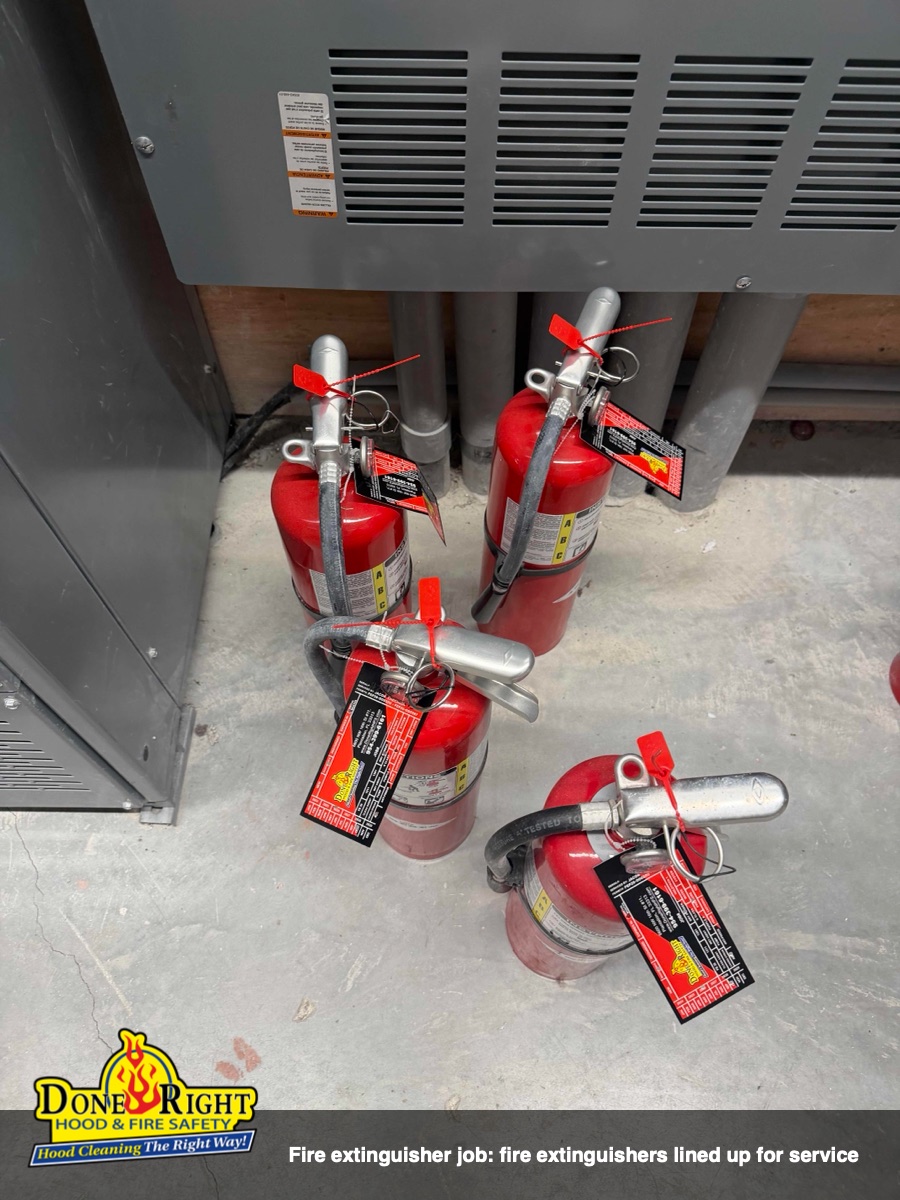
Either way, you need the right units in place and tagged the way Florida requires, plus a record you can hand the fire inspector. We supply commercial extinguishers and place them in service, construction jobs included. We also run tagging programs that put a whole apartment or condo complex on one schedule. Done Right holds a State Fire Marshal license for portable extinguishers, so we inspect, tag, service and hydrotest them ourselves.
Florida licenses the business and permits every technician
It’s unlawful to engage in the business of servicing, repairing, recharging, testing, marking, inspecting, installing or hydrotesting a fire extinguisher without a license from the Division of State Fire Marshal.
- Fire equipment dealer Classes A, B and C cover portable extinguishers. Class D covers pre-engineered systems, such as kitchen hood suppression.
- Each person who actually does the work holds a state permit, and the work can’t go beyond the class of the license they work under.
- Licensed dealers install, inspect, maintain and recharge portable extinguishers to NFPA 10, and Florida’s rule calls its provisions mandatory. Florida’s current fire code references the 2018 edition.
- Annual maintenance follows NFPA 10 and the manufacturer’s manual. Certain stored-pressure extinguishers also get six-year maintenance, recorded on a decal with the year, the month and the agency that did it.
- Hydrostatic tests follow NFPA 10 and the federal Department of Transportation cylinder rules.
What the tag on each extinguisher shows
Florida’s standard service tag carries:
- the words “Do Not Remove”
- the extinguisher’s serial number
- the full name and permit number of the technician who serviced it (initials aren’t accepted)
- the type of service and the type of extinguisher
- the month and year of the service, punched out
- the servicing company’s name, street address and phone number
A new tag goes on each time the extinguisher is serviced, and out-of-date tags come off first. Only the person who did the service fills in and attaches the tag.
Whole-complex tagging for apartments and condos
A complex with many buildings can end up with tags due in every month of the year. A tagging program puts every extinguisher on the property on one schedule:
- One walk of the property, building by building, with each extinguisher inspected and tagged.
- A failed unit is corrected before it gets a tag. Florida lets an extinguisher be tagged only after it meets the standards.
- A record by serial number. Florida invoices for extinguisher service list each extinguisher by serial number and the work done on it. That’s a property-wide list you can keep with your fire inspection files.
- A reminder before the next round comes due.
- The clubhouse kitchen’s hood cleaning and suppression inspection are separate services, covered under hotel and condo kitchens. They can sit on the same calendar as the extinguisher round.
What South Florida fire departments look for
South Florida fire departments publish what they inspect. These are the ones we checked:
- Pompano Beach. Pompano Beach Fire Rescue performs annual fire inspections on all commercial properties and on residential properties of three or more living units. The city’s annual life safety system report form lists fire extinguishers on an annual frequency and asks for the contractor’s certification forms.
- Hollywood. The city’s fire prevention division inspects commercial and multi-family buildings and takes requests for annual inspections.
- Fort Lauderdale. Extinguisher service companies upload their reports to The Compliance Engine, where Brycer and then Fort Lauderdale Fire Rescue review them. Routine checks run on those reports rather than site visits, and a report that shows a clearly deficient extinguisher brings an inspector out in person. More on how those reports work.
- Miami-Dade Fire Rescue (unincorporated Miami-Dade and the cities it serves). Every business needs an annual inspection and a Life Safety Operating Permit, and the program exempts only single- and two-family homes.
- Coral Gables. The fire department’s inspection checklist asks for an up-to-date certification tag on each extinguisher, with the extinguisher mounted on the wall.
- City of Miami. The fire inspection checklist for assembly spaces, where 50 or more people gather, looks for extinguishers inspected and tagged within the past year.
- Boca Raton. Extinguishers must be certified and tagged by a licensed extinguisher company every year, and the city’s inspectors periodically inspect existing commercial and multifamily buildings.
- Palm Beach County Fire Rescue. Its inspection handout says extinguishers are required to be certified every 12 months.
- West Palm Beach. The Fire Prevention Bureau’s regular inspections of commercial and residential properties include a detailed assessment of fire alarms, sprinkler systems, extinguishers and other fire safety equipment.
If your properties include restaurant tenants, our guide for property managers with restaurant tenants covers their kitchens.
Extinguishers for construction sites and new buildings
We supply ABC multipurpose and Class K extinguishers for job sites and for new buildings getting ready to open.
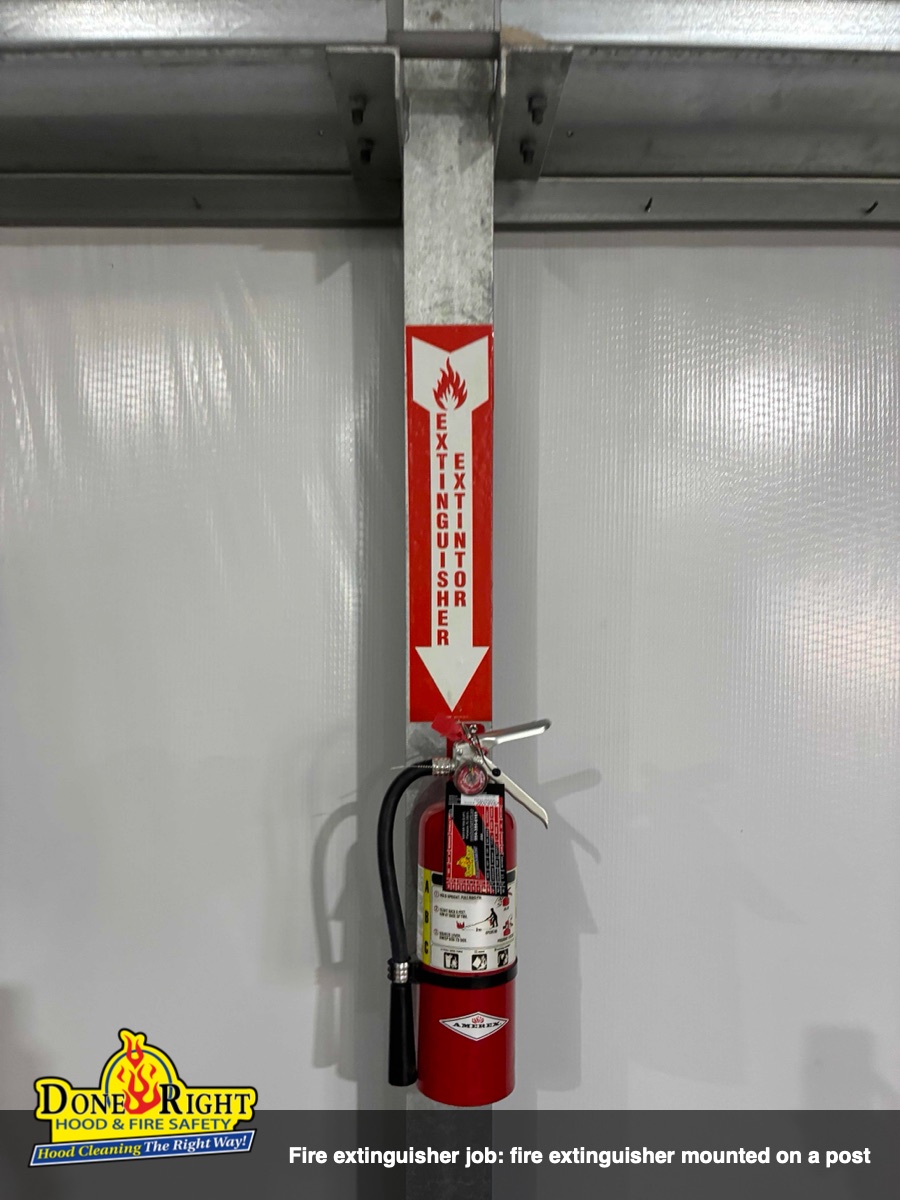
- Florida makes it unlawful to sell, offer or give any new or used extinguisher unless its make and model is listed or approved by UL, FM or another testing laboratory the State Fire Marshal recognizes. Each unit must also carry a UL or manufacturer’s serial number.
- Some kinds can’t be sold or given in Florida at all, including carbon tetrachloride and inverting water extinguishers.
- Florida requires a service tag completed in detail, including the month, when an extinguisher is placed in service. The permitted technician who did the work fills in the tag.
- For an installation, Florida requires the dealer to give you the manufacturer’s literature with its maintenance requirements and operating instructions. Each piece of equipment supplied is covered for one year against defects in material or operation.
- After the certificate of occupancy, the same units can move onto the building’s yearly tagging round.
Kitchen extinguishers (Class K)
The Florida Building Code requires portable fire extinguishers within 30 feet of commercial cooking equipment, and extinguishers meant for cooking-grease fires must be compatible with the hood system’s agent. Florida fire inspection checklists, such as Charlotte County’s, look for a Class K extinguisher whose service tag is less than 12 months old.
The kitchen fire suppression system over the cook line is a separate service, inspected every six months under our own State Fire Marshal license. We’re licensed to inspect and tag the Class K too, so it can go on that same calendar, as in our kitchen fire safety program.
Who does the extinguisher work
We do, under our own State Fire Marshal license. Done Right holds a Florida fire equipment dealer license for portable extinguishers, Class B, which covers servicing, recharging, repairing, installing and inspecting all types of fire extinguishers. It also covers hydrostatic testing of the ABC and Class K extinguishers on this page, done to NFPA 10 and the federal Department of Transportation cylinder rules. The kitchen fire suppression systems we service fall under a separate license, Class D, for pre-engineered systems.
Florida also requires every technician who does the work to hold a state permit, carry it with a photo identification card on the job, and show both on demand. Ask to see them.
One call sets up hood cleaning, suppression and extinguishers
One call to us can set up a kitchen’s hood cleaning, its kitchen fire suppression inspection and its extinguisher tagging. One person coordinates the visits, so the kitchen keeps cooking.
- Emergency repairs, with rapid response across South Florida from our Plantation office.
- Installs with the city filing handled for you.
- Electrostatic precipitators (pollution control units): few companies are licensed to service them, and we do.
Fire extinguisher questions we hear
Do you need a license to inspect and tag fire extinguishers in Florida?
Yes, Florida makes it unlawful to engage in the business of servicing, repairing, recharging, testing, marking, inspecting, installing or hydrotesting fire extinguishers without a license from the Division of State Fire Marshal. Portable extinguishers fall under dealer license Classes A, B and C, and every technician who does the work needs a state portable permit. The tag on each extinguisher shows that technician’s name and permit number.
Which commercial fire extinguishers can be sold in Florida?
Florida allows only commercial fire extinguisher makes and models listed or approved by UL, FM or another laboratory the State Fire Marshal recognizes, each carrying a UL or manufacturer’s serial number. Some kinds can’t be sold or given at all, including carbon tetrachloride and inverting water extinguishers. Once an extinguisher is placed in service, it needs a completed Florida service tag from the permitted technician who did the work.
How often do fire extinguishers need service in Florida?
Florida’s rule calls for annual fire extinguisher maintenance under NFPA 10 and the manufacturer’s manual, plus six-year maintenance for certain stored-pressure extinguishers, recorded on a decal. Local fire departments look for current tags too. Boca Raton says extinguishers must be certified and tagged by a licensed extinguisher company annually, and Palm Beach County Fire Rescue’s inspection handout says extinguishers are required to be certified every 12 months.
We manage an apartment complex. Can every building’s fire extinguisher inspection and tagging go on one schedule?
Yes, with a fire extinguisher tagging program that walks the property building by building and puts every extinguisher on one schedule, with a reminder before the next round. Florida invoices for extinguisher service list each extinguisher by serial number and the work done on it, so you have a record for the fire inspector.
What does the service tag on our fire extinguisher have to show?
Florida’s standard fire extinguisher service tag says “Do Not Remove” and shows the extinguisher’s serial number, the full name and permit number of the technician who serviced it, the type of service and of extinguisher, the month and year punched out, and the servicing company’s name, street address and phone number. A new tag goes on each time the extinguisher is serviced.
Our clubhouse kitchen has a hood system. Which kitchen fire extinguisher goes there?
The Florida Building Code requires portable fire extinguishers within 30 feet of commercial cooking equipment, and extinguishers meant for cooking-grease fires must be compatible with the hood system’s agent. Florida fire inspection checklists, such as Charlotte County’s, look for a Class K extinguisher whose service tag is less than 12 months old.
Do you supply fire extinguishers for construction sites?
Yes, we supply listed, serial-numbered ABC and Class K fire extinguishers for job sites and new buildings, placed in service with a completed Florida service tag. After the certificate of occupancy, the same units can move onto the building’s annual tagging program.
Call (954) 399-6161
For a complex, tell us how many buildings there are, about how many extinguishers, and the month punched on the current tags. For a job site, send the address, the schedule and what’s going up.
Call (954) 399-6161 or email office@donerighthfs.com. Our office is at 6600 NW 16th Street, Suite 11, Plantation, FL 33313.
Sources
- https://www.flrules.org/gateway/ruleNo.asp?id=69A-21.241
- http://www.leg.state.fl.us/statutes/index.cfm?App_mode=Display_Statute&URL=0600-0699/0633/Sections/0633.304.html
- http://www.leg.state.fl.us/statutes/index.cfm?App_mode=Display_Statute&URL=0600-0699/0633/Sections/0633.102.html
- https://www.law.cornell.edu/regulations/florida/Fla-Admin-Code-Ann-R-69A-21-203
- https://www.flrules.org/gateway/ruleNo.asp?id=69A-21.203
- https://www.myfloridacfo.com/docs-sf/state-fire-marshal-libraries/sfm-documents/bfp/florida-fire-prevention-code/69a-60-nopr.pdf
- https://www.law.cornell.edu/regulations/florida/Fla-Admin-Code-Ann-R-69A-21-237
- https://www.flrules.org/gateway/ruleNo.asp?id=69A-21.242
- https://www.flrules.org/gateway/ruleNo.asp?id=69A-21.240
- https://www.flrules.org/gateway/ruleNo.asp?id=69A-21.251
- http://www.leg.state.fl.us/statutes/index.cfm?App_mode=Display_Statute&URL=0600-0699/0633/Sections/0633.308.html
- https://www.pompanobeachfl.gov/government/fire-rescue/fire-prevention
- https://cdn.pompanobeachfl.gov/city/pages/fire/fire_prevention/Fire%20Safety%20Inspection%20-%20Protection%20System%20Report.pdf
- https://www.hollywoodfl.org/260/Scheduling-an-Inspection
- https://www.miamidade.gov/fire/routes-results.asp
- https://miamidade.gov/fire/existing-structures.asp
- https://www.coralgables.com/sites/default/files/mediaexport/Fire%20Dept/Applications-%20Forms/CGFD-PRE-INSPECTION-EK.pdf
- https://www.miami.gov/files/assets/public/v/1/document-resources/pdf-docs/fire/fire-cu-assembly-checklist.pdf
- https://www.myboca.us/224/Inspections
- https://discover.pbc.gov/pbcfr/CRRD/Documents/Keys%20to%20Passing%20your%20Fire%20Safety%20Inspection.pdf
- https://www.wpb.org/Departments/Fire-Department/Fire-Prevention-Bureau
- http://www.leg.state.fl.us/statutes/index.cfm?App_mode=Display_Statute&URL=0600-0699/0633/Sections/0633.314.html
- http://www.leg.state.fl.us/statutes/index.cfm?App_mode=Display_Statute&URL=0600-0699/0633/Sections/0633.306.html
- https://up.codes/viewer/florida/fl-building-code-2023/chapter/9/fire-protection-and-life-safety-systems
- https://www.charlottecountyfl.gov/core/fileparse.php/939/urlt/preinspection-2024.pdf