Hood Filter Exchange for South Florida Restaurants
By Done Right Hood & Fire Safety of So. Florida
If you run five stores, you may get five different answers to “When were the hood filters last cleaned?” One store soaks them every week. Another hasn’t touched them since the last hood cleaning.
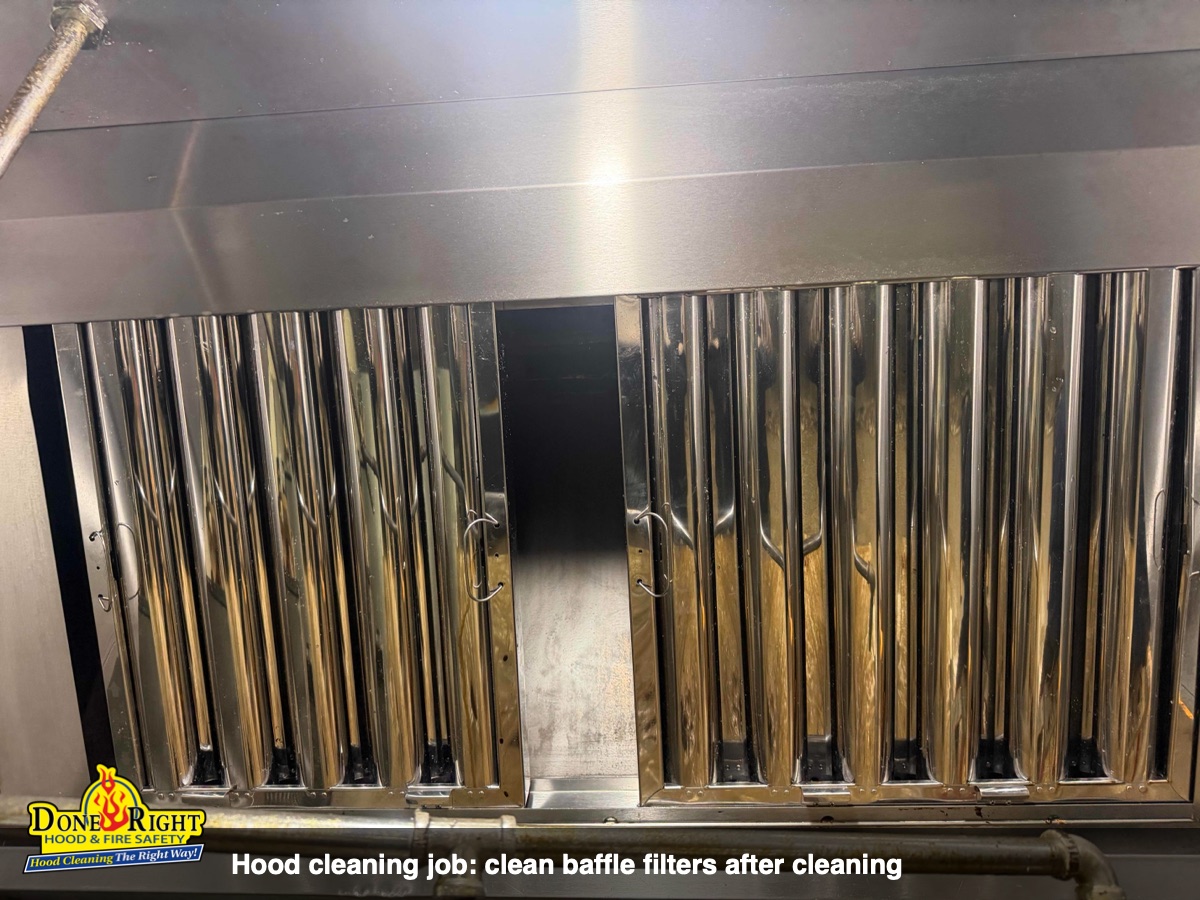
Our filter exchange program puts the answer on the hood. It’s preventive maintenance for the exhaust system: on a set schedule, we swap your greasy hood baffle filters for clean ones and write the dates on a sticker on the hood.
Each hood gets a swap schedule and a dated sticker
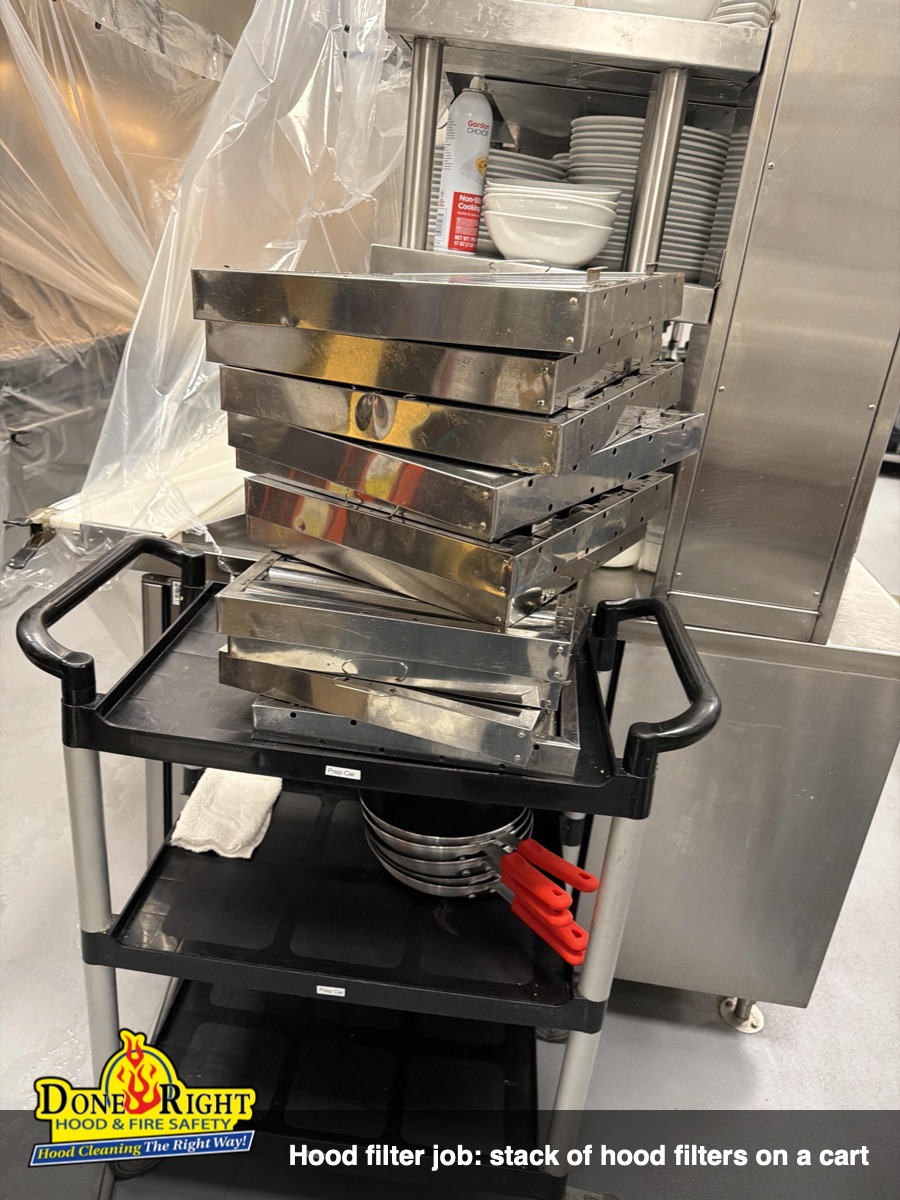
- We set the swap schedule with you, store by store.
- On each visit we pull the dirty baffle filters and put a clean set in their place, so nobody on your staff is soaking and scrubbing on swap day.
- The sticker on the hood shows when your filters were last replaced and the next due date. Your district manager, your landlord or an inspector can read it at a glance.
- We send scheduled service reminders, and past reports and upcoming appointments are online in our customer portal.
What greasy filters do to your hood
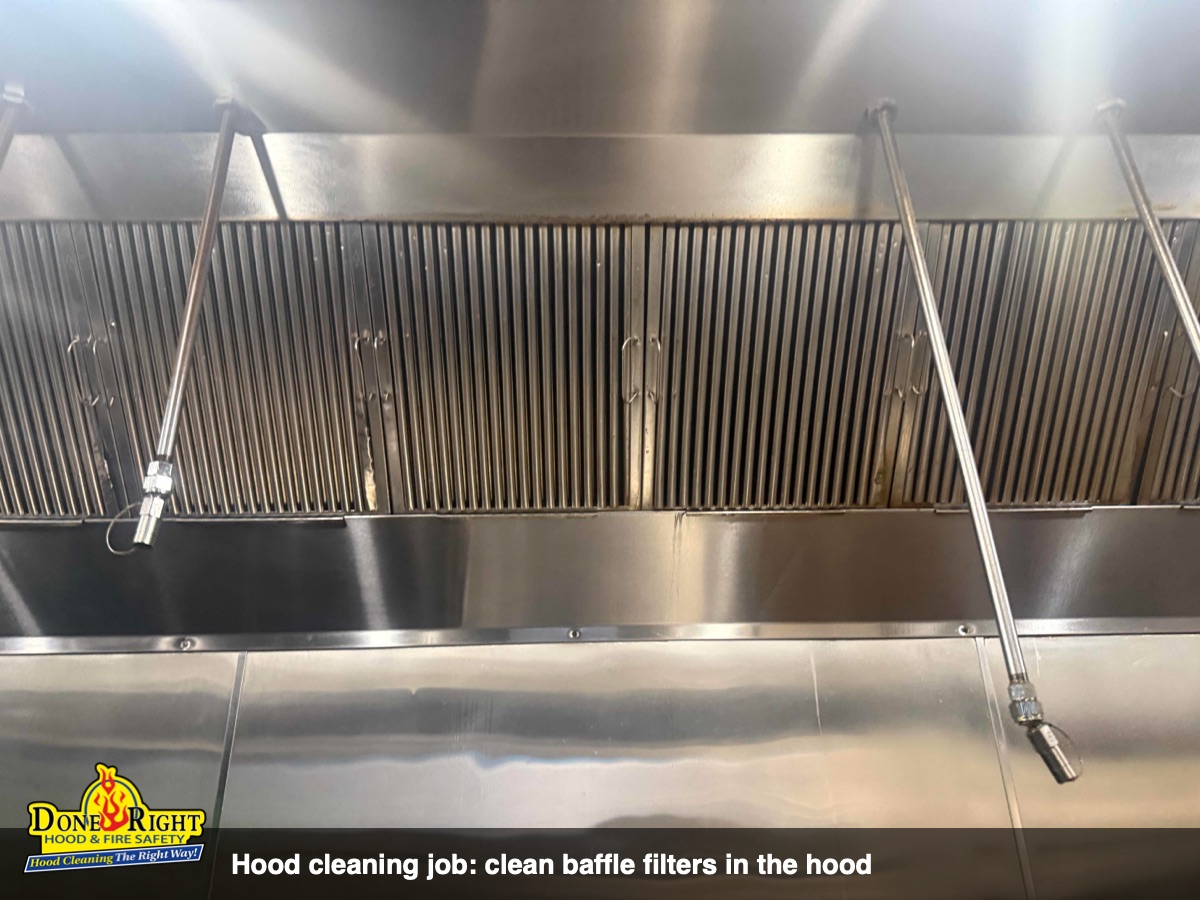
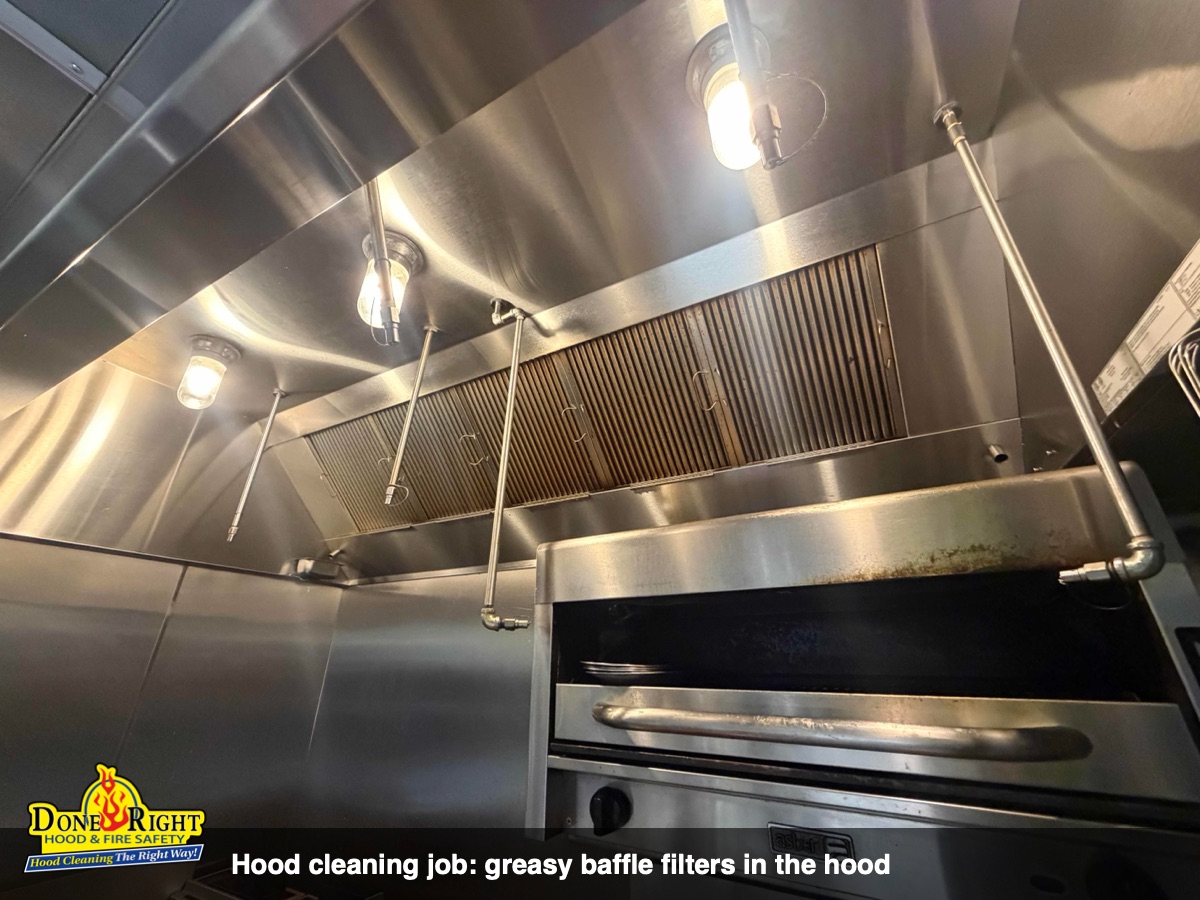
Baffle filters trap grease droplets before they reach the duct. Our advice, the same advice we give food truck operators, is to keep them clean between professional hood cleanings. Grease-loaded filters choke the air your hood is trying to pull. More grease in them also means more fuel sitting right over the cooking line, and stronger kitchen odors.
Where the filter swap fits in the all-at-once visit
Filters catch grease at the hood. The hood, plenum, ductwork and rooftop exhaust fan still need hood and duct cleaning.
The filter swap is one part of our done-all-at-once visit. In one trip we do the hood cleaning, the kitchen fire suppression inspection, the filter swap and an exhaust fan and belt check, with one report and one set of stickers and tags. Many of the essential kitchen services sit under one roof, with a single person to call and coordinate with, so your kitchen keeps cooking and making money. Between visits, the exchange schedule keeps the filters clean.
See the kitchen fire safety program.
Cleaning filters in-house between swaps
Some kitchens clean filters themselves between visits. If yours does, clean them every week, or every two weeks if you cook less. Follow these steps:
- Remove the filters carefully.
- Mix the degreaser according to the manufacturer’s instructions.
- Soak the filters for 60 to 90 minutes.
- Scrub them thoroughly, or power wash them.
- Rinse them completely.
- Let them dry fully before you put them back.
Wash them in the right place:
- Never in a food-prep sink, a hand sink or a 3-compartment sink, and never in the parking lot, an alley or on the ground outside.
- Use a mop sink or utility sink, a wash bay, an approved commercial service facility, or an environmentally compliant outdoor wash station.
The right spot keeps grease out of your drains and wastewater, and away from food. Rules vary by city and county, so check with your local fire marshal or health department.
Emergency repairs, precipitators and installs
- Emergency repairs, with rapid response across South Florida from our Plantation office.
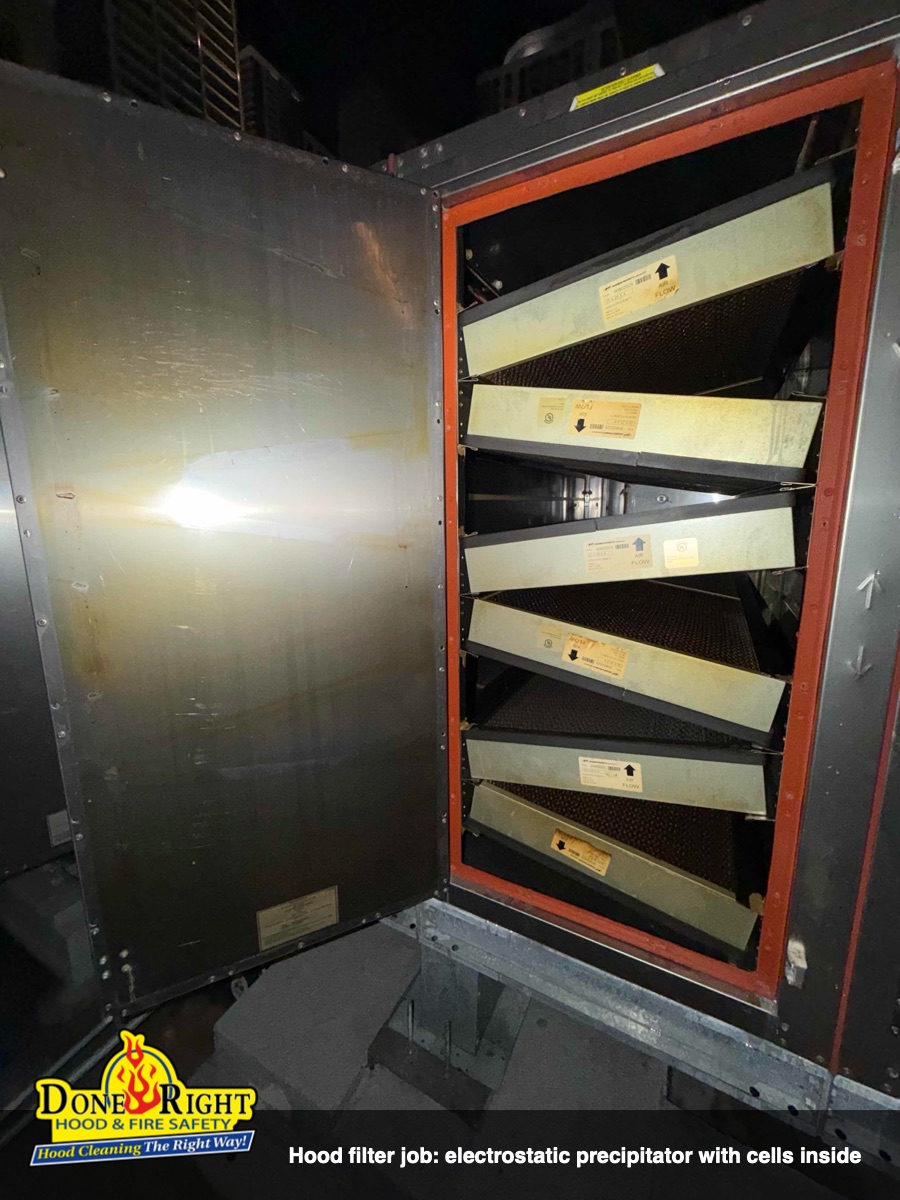
- Electrostatic precipitators (pollution control units): few companies are licensed to service them, and we do.
- Installs with the city filing handled for you.
Filter exchange questions we hear
How often do you do a hood filter exchange?
A hood filter exchange runs on a schedule we set with you for each location. The sticker on the hood shows when the filters were last replaced and the next due date, and you get a reminder before each visit.
Does a hood filter exchange replace hood cleaning?
No, a hood filter exchange doesn’t replace hood cleaning. Filters catch grease before it reaches the duct, but the hood, plenum, ductwork and rooftop exhaust fan still need professional cleaning. You can book both in one visit.
Can you do a hood filter exchange at several locations?
Yes, we do the hood filter exchange at locations across Broward, Miami-Dade and Palm Beach counties. Each location gets its own schedule and its own dated sticker, and past reports and upcoming appointments are online in our customer portal.
Where should our staff wash kitchen hood filters?
Wash hood filters in a mop sink or utility sink, a wash bay, an approved commercial service facility, or an environmentally compliant outdoor wash station. Never in a food-prep, hand or 3-compartment sink, and never in the parking lot. Rules vary by city and county, so check with your local fire marshal or health department.
Call (954) 399-6161
Tell us how many locations you have, how many hoods are at each and how busy each kitchen runs, and we’ll set up the schedule. We’re 5-star rated on Google, with a staffed office in Plantation.
Call (954) 399-6161 or email office@donerighthfs.com. Our office is at 6600 NW 16th Street, Suite 11, Plantation, FL 33313.