Restaurant hood and duct cleaning in South Florida
By Done Right Hood & Fire Safety of So. Florida
Wood-fired ovens, charcoal grills, charbroilers and woks load a hood system with grease, and a kitchen that cooks day and night loads it faster. The hood you can see is only the start. Grease also collects where you can’t see it, in the plenum, the duct and the fan on the roof.
We clean the whole exhaust system, from the hood to the rooftop fan, on the schedule that fits how you cook. You get a report with before-and-after photos, a certificate to keep on site, and labels near the access panels. We work around your hours, including overnight.
What we clean
A hood cleaning follows the grease from the canopy to the roof:
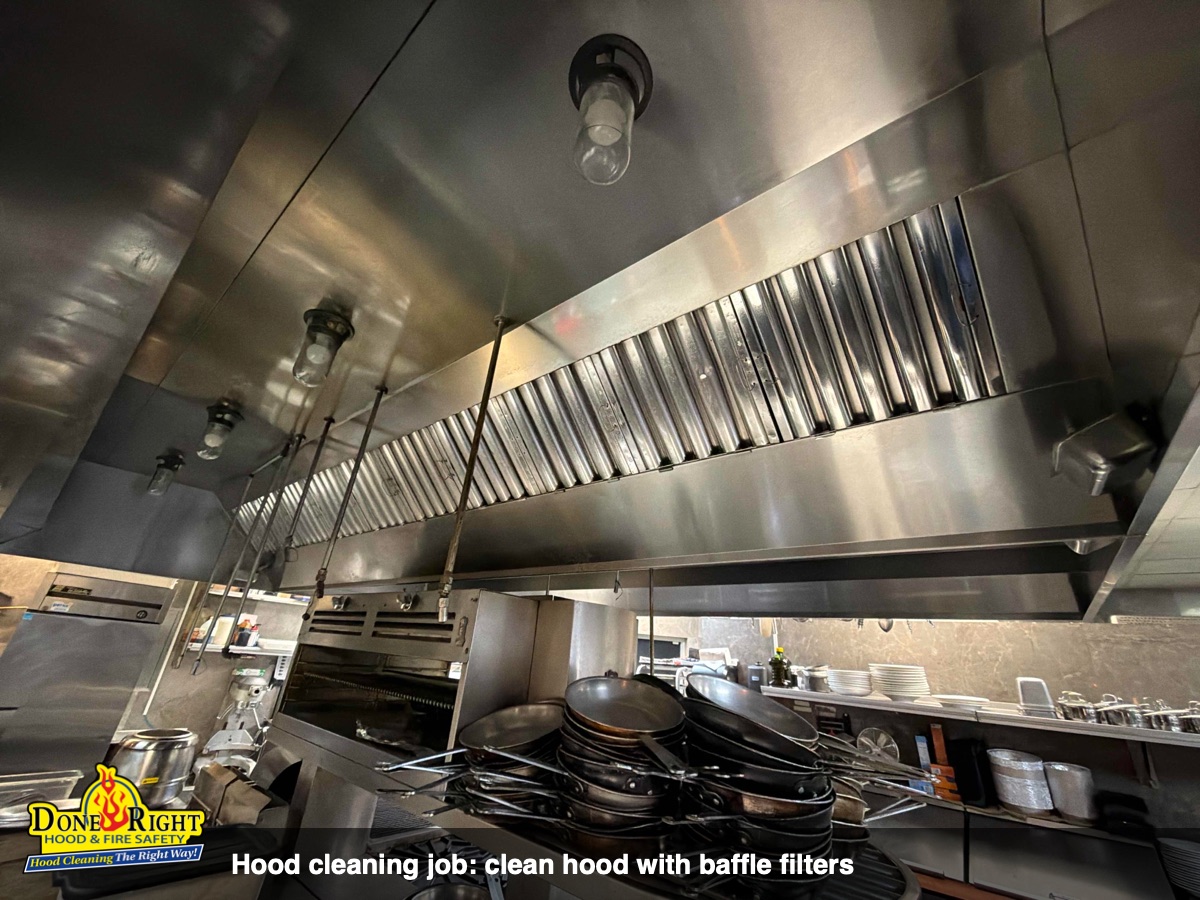
- Hood canopy. The inside of the hood over your cook line.
- Filters. The baffle filters that catch grease before it reaches the duct.
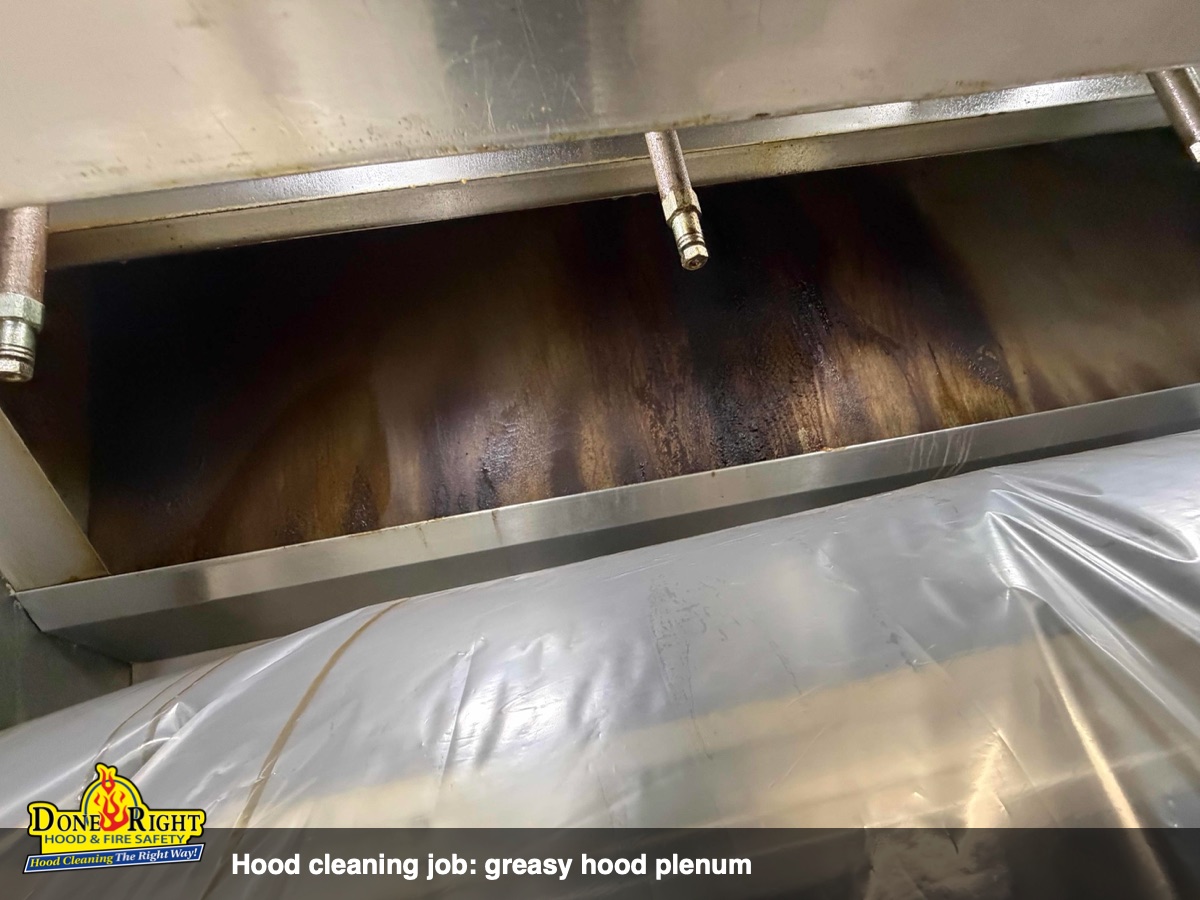
- Plenum. The space behind the filters, where grease collects out of sight.
- Ductwork. Vertical and horizontal runs, reached and cleaned through the access panels.
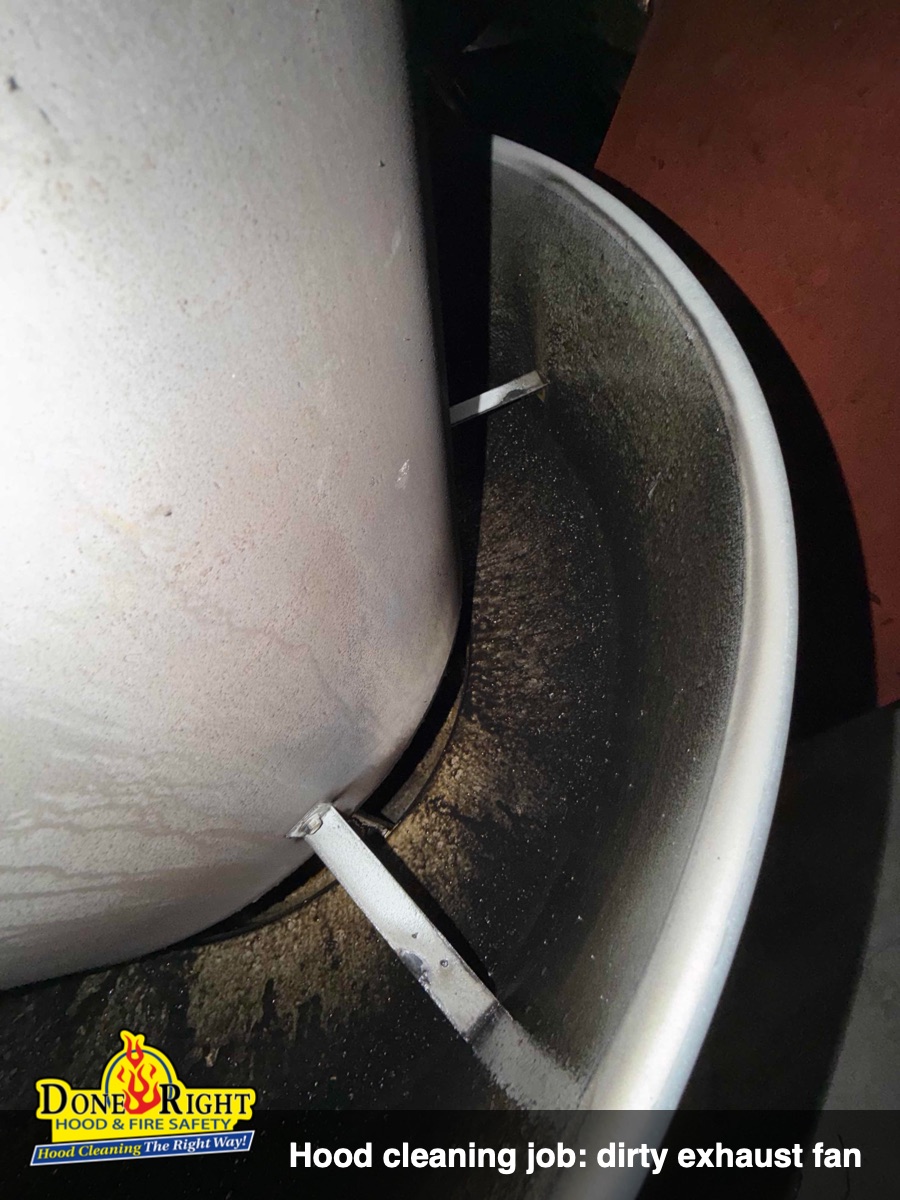
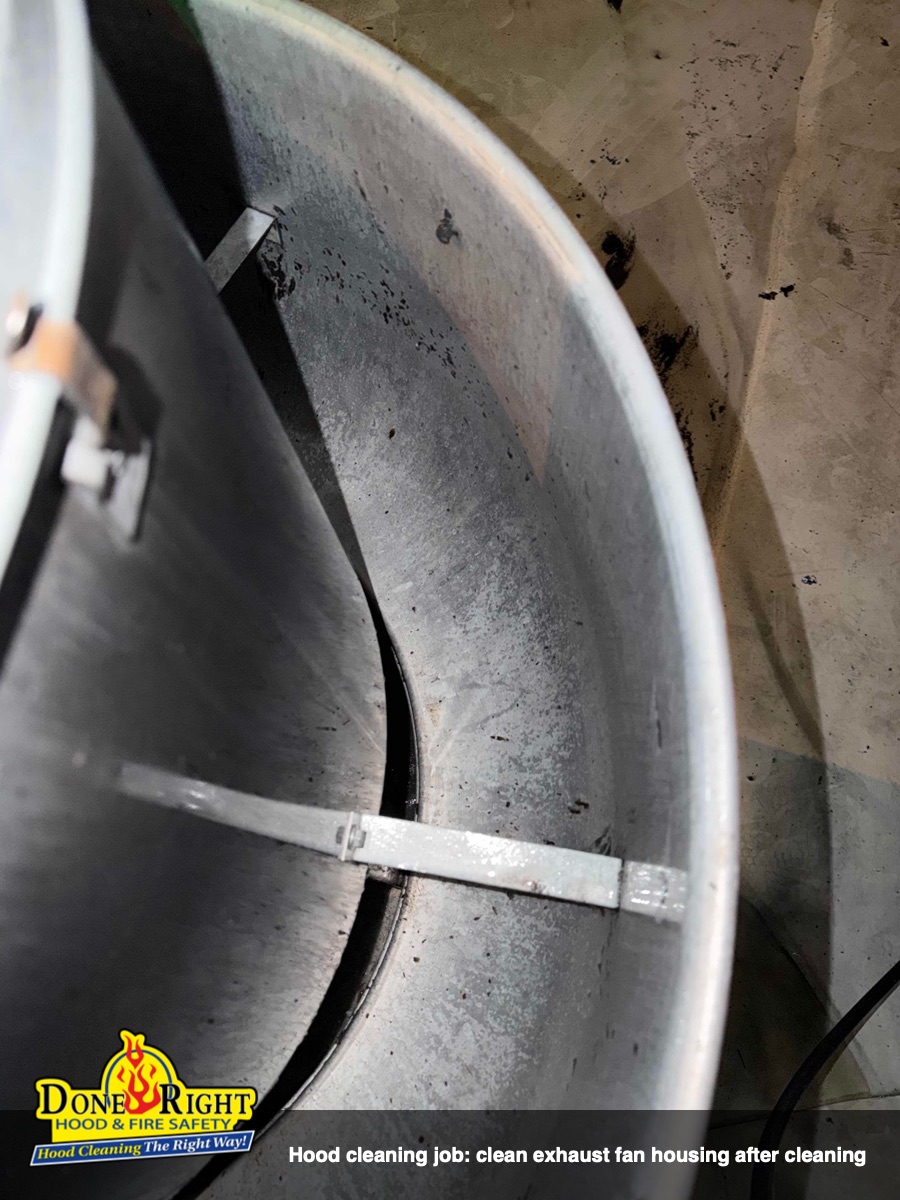
- Rooftop exhaust fan. The fan housing and blades.
- Grease containment. The cups, trays or troughs that catch grease at the fan, emptied.
- Pollution control units. If your exhaust runs through a pollution control unit or electrostatic precipitator, we clean that too.
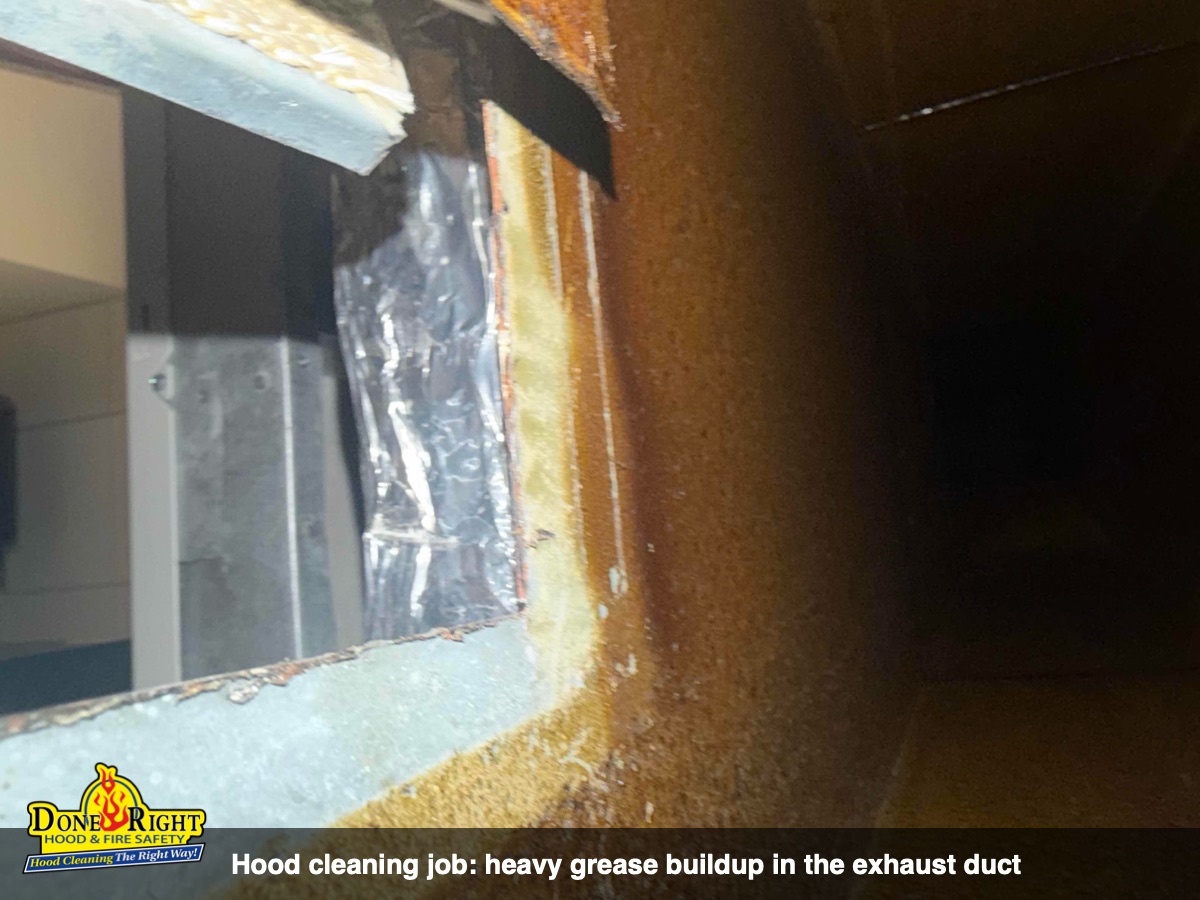
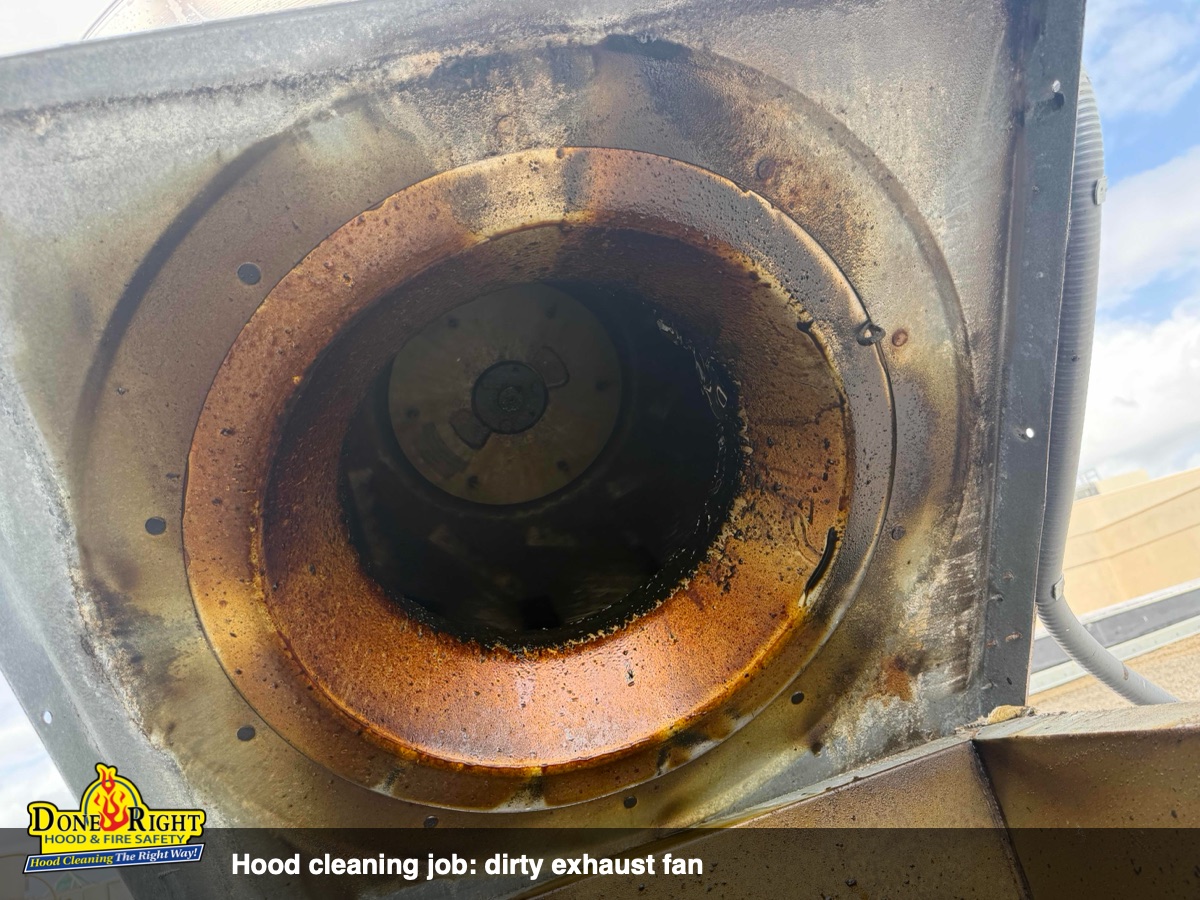
The goal is a system cleaned to remove grease and combustible deposits, per NFPA 96 and the local fire authority.
For a longer walk through the system, read hood and duct cleaning in South Florida kitchens.
How often your hood needs attention
Florida enforces a statewide fire code, the Florida Fire Prevention Code, and its current 8th Edition took effect December 31, 2023. It adopts the 2021 edition of NFPA 96, the national standard for commercial kitchen ventilation and fire protection.
Fire-marshal guidance based on NFPA 96 ties grease inspections to how you cook:
| How you cook | Inspect for grease buildup |
|---|---|
| Solid fuel: wood or charcoal | Monthly |
| High volume: 24-hour cooking, charbroiling, woks | Quarterly |
| Moderate volume | Every six months |
| Low volume: churches, day camps, seasonal businesses | Once a year |
The schedule is for inspection. When an inspection finds grease buildup, the system has to be cleaned.
Your local fire inspector is the authority on your kitchen, and Charlotte County’s fire inspection checklist, for one, tells owners to ask the inspector about the right cleaning timetable for their kitchen. If you’re not sure which row you’re in, call us and we’ll talk it through.
Between cleanings, filter exchange keeps clean filters in the hood on a set schedule.
Who may clean a hood in Florida
Florida’s fire code requires a grease-contaminated kitchen exhaust system to be cleaned by properly trained, qualified and certified people who are acceptable to the local fire authority.
Broward County adds its own rules, and they apply countywide:
- The person inspecting your hood system for grease must meet IKECA training requirements, or those of another nationally recognized exhaust-cleaning association that the fire department accepts.
- The cleaner’s training certification goes to the local fire authority before cleaning. Afterward, a copy of the cleaning report, with before-and-after photos, goes to the local fire authority too.
- The fire department can order grease buildup in kitchen exhaust ducts removed as a hazard.
What you get after every cleaning
- A service report with before-and-after photos.
- A certificate to keep on site, plus labels near the access panels.
- Online access to past reports and upcoming appointments through our customer service portal, so you’re not digging for paper when your fire inspector or insurer asks.
- A reminder before your next visit comes due.
What we check while we’re there
A cleaning puts our crew inside your hood and up on your roof, so we look at the parts that keep the system working:
- Fan belts. A worn or loose belt slows the fan, and a slow fan pulls less smoke and grease out of the kitchen.
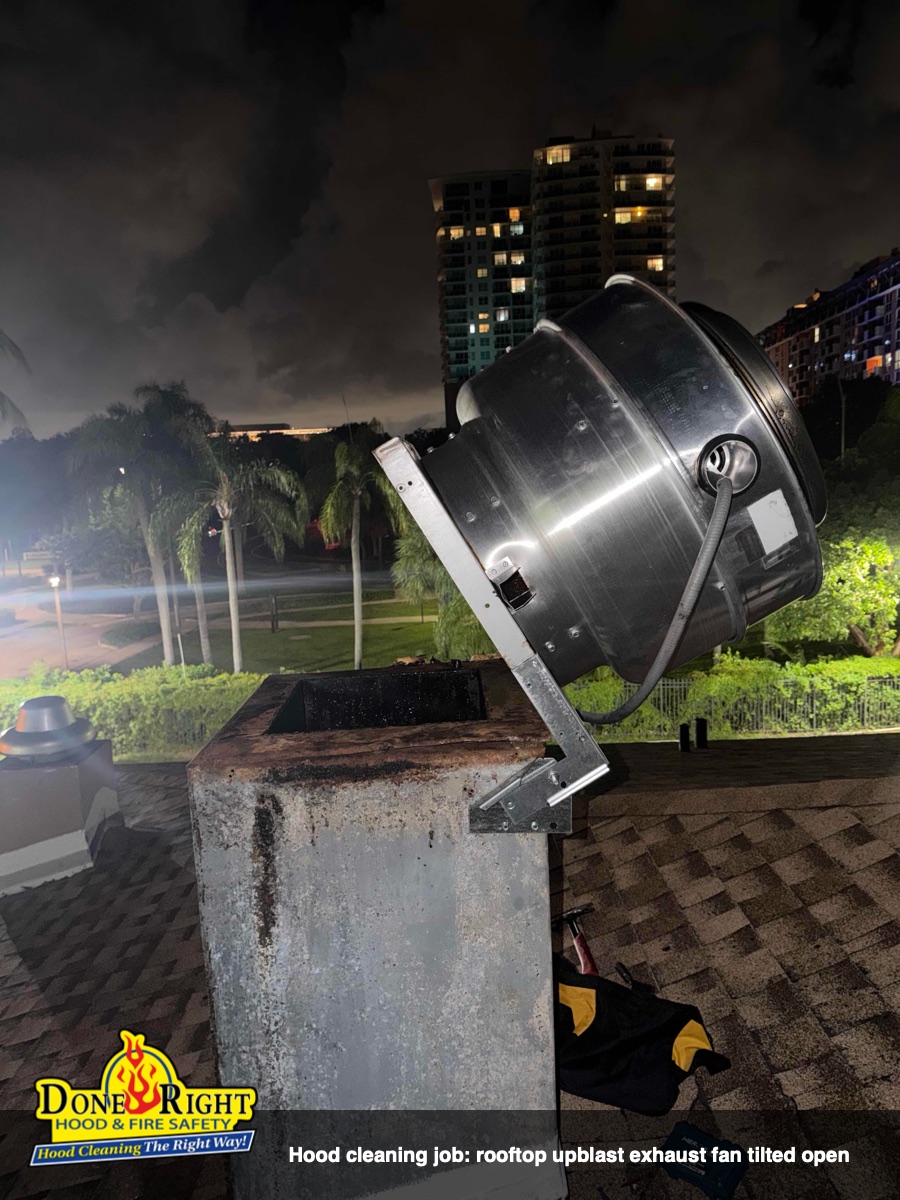
- Hinges. Florida’s mechanical code requires upblast fans serving grease hoods to be hinged. The hinge lets the fan tip open for cleaning, so we make sure it’s intact.
- Grease on the roof. We look for grease escaping around the fan and onto the roof. Florida fire inspection checklists, such as Charlotte County’s, look for a grease catch container on the roof vent and no grease on the roof surface.
- Your suppression system. Cleaning works around the nozzles and detection line of your kitchen fire suppression system, and the system has to be back in service before the crew leaves.
If a fan, belt or motor needs a repair, we’ll tell you what we found. Repairs and filter exchange are their own services.
Overnight cleaning, and the suppression inspection on the same trip
Most kitchens can’t stop cooking for a cleaning in the middle of the day. We schedule around your hours, including overnight, so the crew works while the line is down.
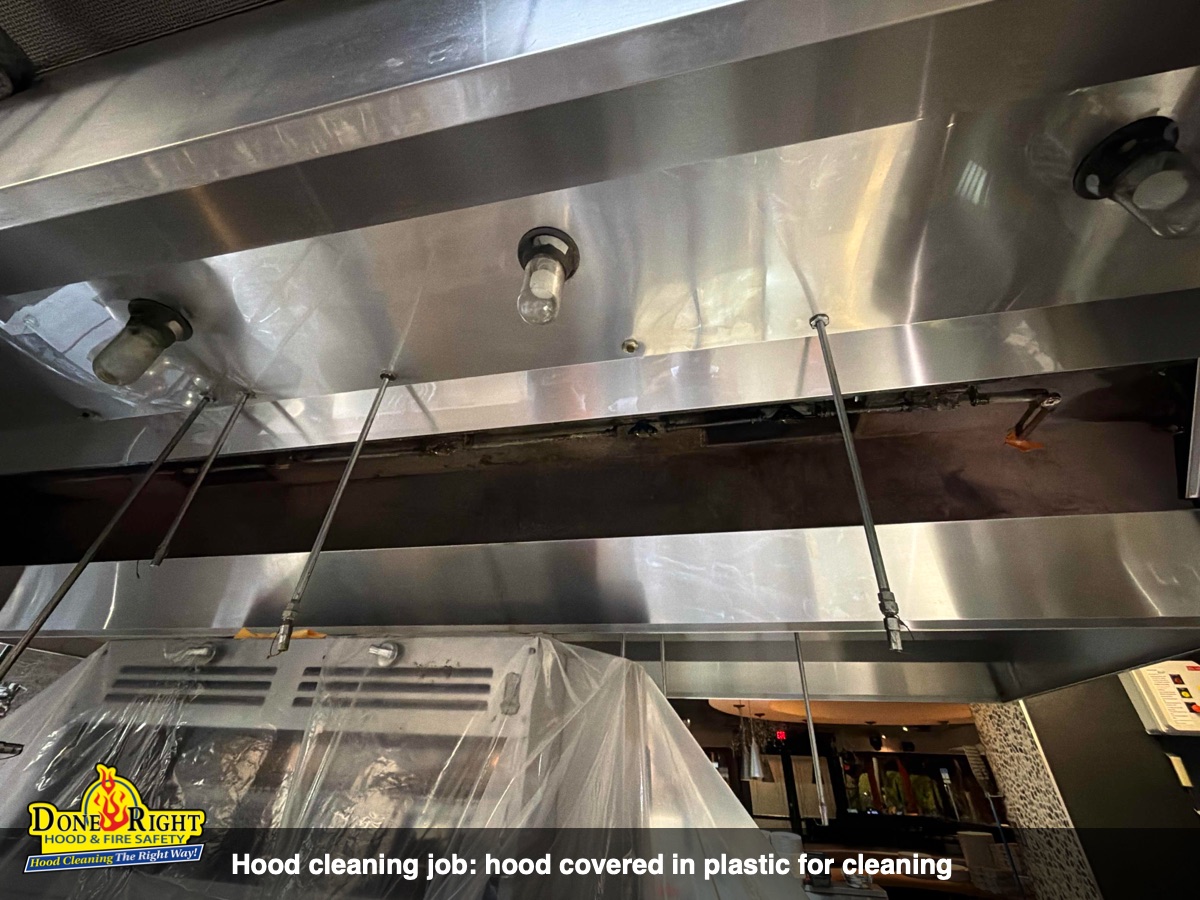
If your kitchen fire suppression system is due too, we can inspect it on the same visit. That’s our kitchen fire safety program: hood cleaning, the suppression inspection, filter exchange and a fan check on one schedule, with one report.
One person at our office takes your call and coordinates the hood cleaning, the suppression inspection and the filter and fan work, so the kitchen can keep serving and making money.
Ten checks after any hood cleaning, ours included
We shared this checklist in our Food Truck Expo talk in 2025, and it works for any kitchen:
- The inside of the hood canopy is visibly clean.
- The baffle filters are cleaned thoroughly.
- The plenum is fully cleaned.
- The access panels were opened and cleaned.
- Vertical and horizontal duct runs are cleaned.
- The exhaust fan housing and blades are clean.
- Fan belts, hinges and wiring are intact.
- Grease cups, trays and troughs are empty.
- The suppression system is back in service.
- Service stickers and certificates are updated.
One company for the hood and the suppression system
- Licensed by the Florida Division of State Fire Marshal to service, repair, install and inspect pre-engineered kitchen fire suppression systems, so one company can handle the hood and the suppression system.
- A CaptiveAire TANK certified technician on staff.
- Emergency repairs, with rapid response across South Florida from our Plantation office.
- Electrostatic precipitators (pollution control units): few companies are licensed to service them, and we do.
- Installs with the city filing handled for you.
- 5-star rated on Google.
Where we work
Our crews work out of a staffed office in Plantation and serve restaurant kitchens across Broward, Miami-Dade and Palm Beach counties. In Broward, that includes Fort Lauderdale, Plantation, Sunrise, Coral Springs, Hollywood, Pembroke Pines, Miramar and Deerfield Beach. We also serve Miami, Miami Beach, Hialeah and Aventura in Miami-Dade, and Boca Raton, Delray Beach and West Palm Beach in Palm Beach County.
Hood cleaning questions we hear
How often does a restaurant need kitchen hood cleaning?
How often you need kitchen hood cleaning depends on how you cook. Fire-marshal guidance based on NFPA 96 sets grease inspections monthly for solid-fuel cooking, quarterly for high-volume kitchens such as 24-hour, charbroil or wok operations, every six months for moderate volume and once a year for low-volume operations. When an inspection finds grease buildup, the system has to be cleaned. When in doubt, ask your fire inspector about the right timetable, as Charlotte County’s checklist tells owners to do.
Who is allowed to do kitchen hood cleaning in Florida?
For kitchen hood cleaning in Florida, the fire code requires a grease-contaminated kitchen exhaust system to be cleaned by properly trained, qualified and certified people who are acceptable to the local fire authority. In Broward County, the person inspecting the system for grease must meet IKECA training requirements, or those of another nationally recognized exhaust-cleaning association the fire department accepts, and the training certification goes to the fire authority before cleaning.
Does your kitchen hood cleaning include the ductwork and the rooftop fan, or just the hood?
Our kitchen hood cleaning covers the whole exhaust system. That means the hood canopy, filters and plenum, the vertical and horizontal ductwork through the access panels, and the rooftop exhaust fan with the grease containment at the fan.
What paperwork do I get after a kitchen hood cleaning?
A kitchen hood cleaning service report with before-and-after photos, a certificate to keep on site, and labels near the access panels. Past reports and upcoming appointments are online through our customer service portal. In Broward County, a copy of the cleaning report with before-and-after photos goes to the local fire authority.
Can you do kitchen hood cleaning overnight, after we close?
Yes, we do kitchen hood cleaning after you close. We schedule around your kitchen’s hours, including overnight, so the cleaning doesn’t cut into service.
Call (954) 399-6161
Tell us what you cook, how many hoods you have and when the system was last cleaned. We’ll set a date around your hours and send a reminder before we come.
Call (954) 399-6161 or email office@donerighthfs.com.
Sources
- https://myfloridacfo.com/division/sfm/bfp/florida-fire-prevention-code
- https://www.myfloridacfo.com/docs-sf/state-fire-marshal-libraries/sfm-documents/bfp/florida-fire-prevention-code/69a-60-nopr.pdf
- https://www.myfloridacfo.com/docs-sf/state-fire-marshal-libraries/sfm-documents/bfp/florida-fire-prevention-code/69a-3-012-nopr.pdf
- https://www.firemarshal.ks.gov/DocumentCenter/View/340/Fire-Fact-066—Hood-Suppression-PDF
- https://captiveaire.com/manuals/cleaninginstructions/deep_cleaning_instructions.pdf
- https://www.myfloridacfo.com/docs-sf/state-fire-marshal-libraries/sfm-documents/bfp/florida-fire-prevention-code/florida-fire-prevention-code-8th-edition-nfpa-1-fl-sp.pdf
- https://www.charlottecountyfl.gov/core/fileparse.php/939/urlt/preinspection-2024.pdf
- https://myfloridacfo.com/docs-sf/state-fire-marshal-libraries/sfm-documents/bfp/local-amendments/broward-county-2025.pdf
- https://up.codes/viewer/florida/fl-mechanical-code-2023/chapter/5/exhaust-systems