Restaurant Hood Installation in South Florida
By Done Right Hood & Fire Safety of So. Florida
The lease is signed, or close to it. Opening day is tied to rent, staff and money already spent. The hood system is one of the pieces that has to pass inspection before you open.
We design, fabricate and install restaurant hood systems across South Florida. We also handle the steps around them, from mechanical plans and permits to shop fabrication, the kitchen fire suppression filing and the final fire test. One contractor from plans to final test.
How a hood installation works, step by step
- We prepare the mechanical plans for your kitchen, covering the Type I hood, grease duct, exhaust fan and make-up air.
- The plans go to the building department for review. Fabrication waits for approval.
- The hood and grease duct are built in the shop to the approved plans.
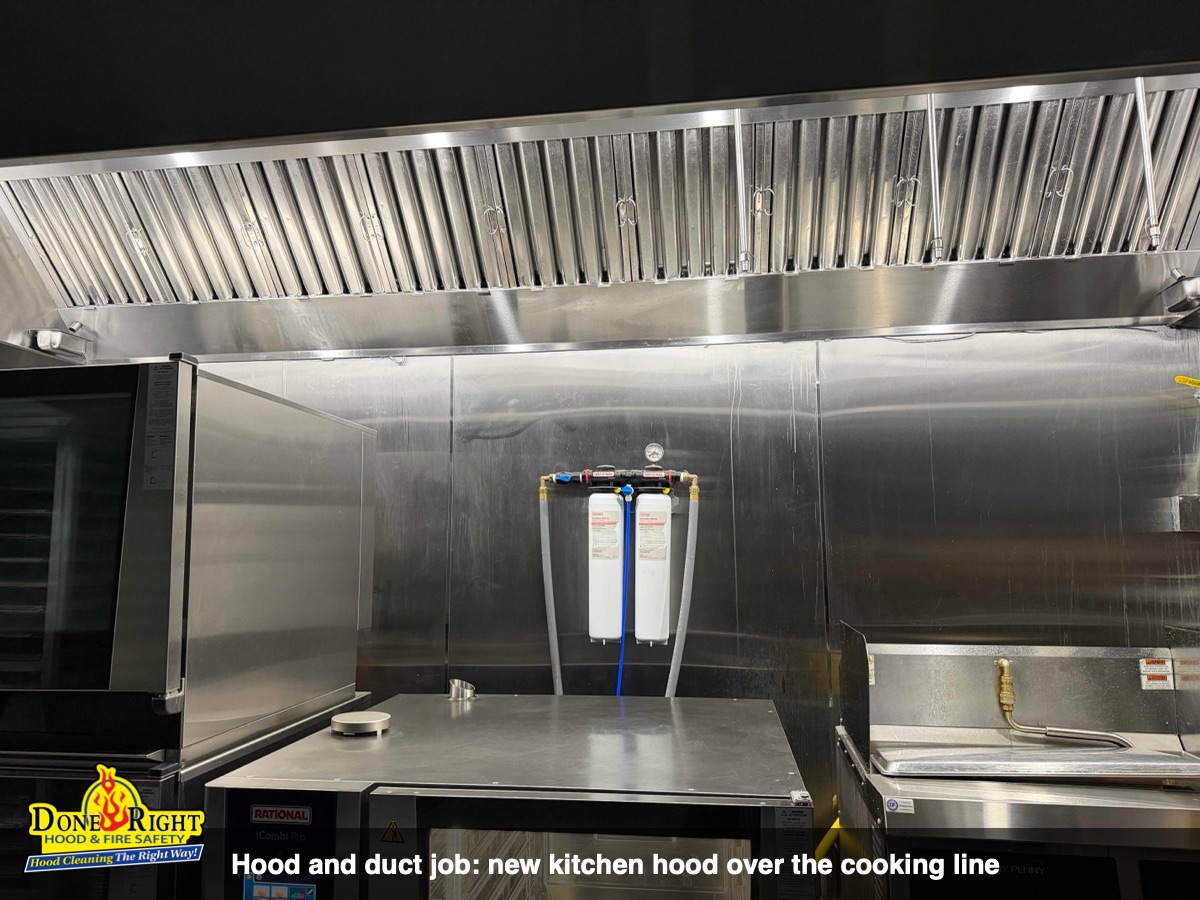
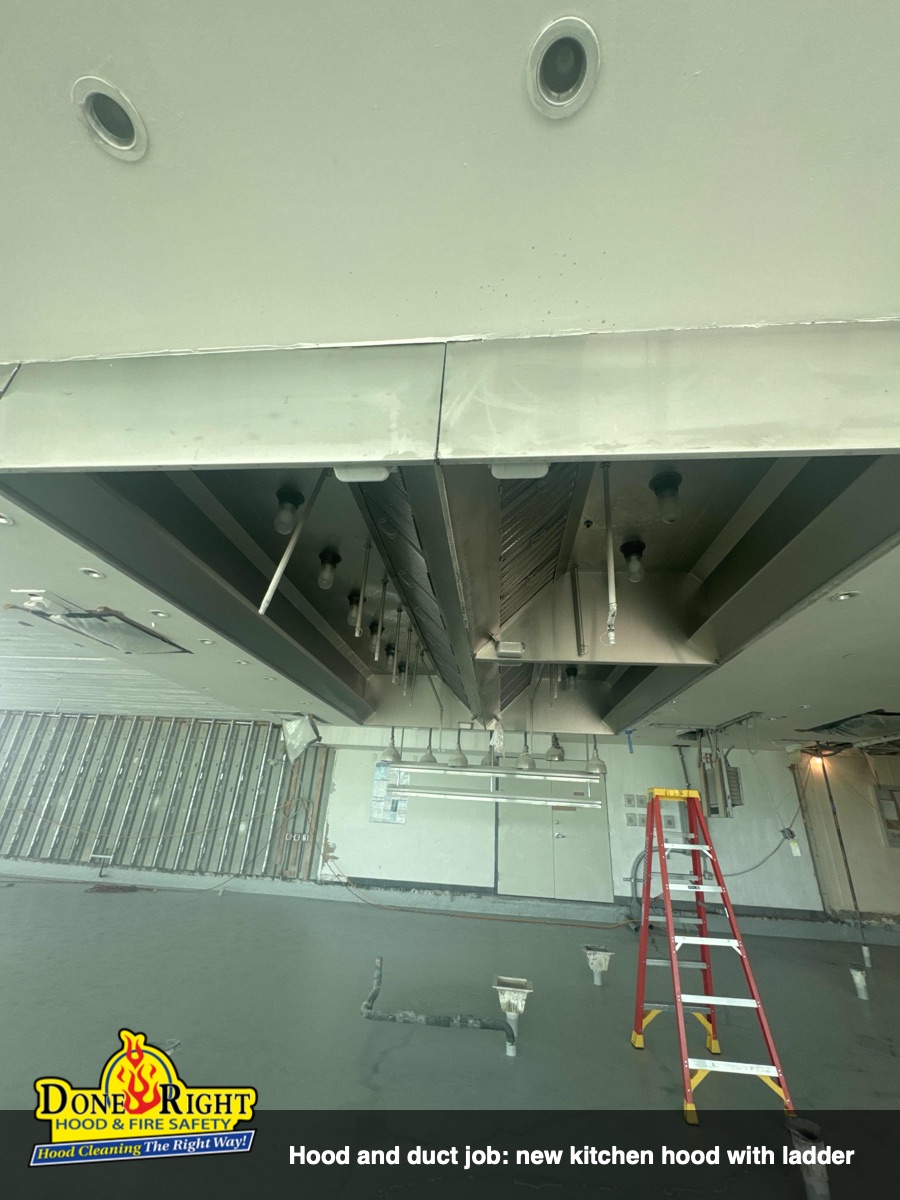
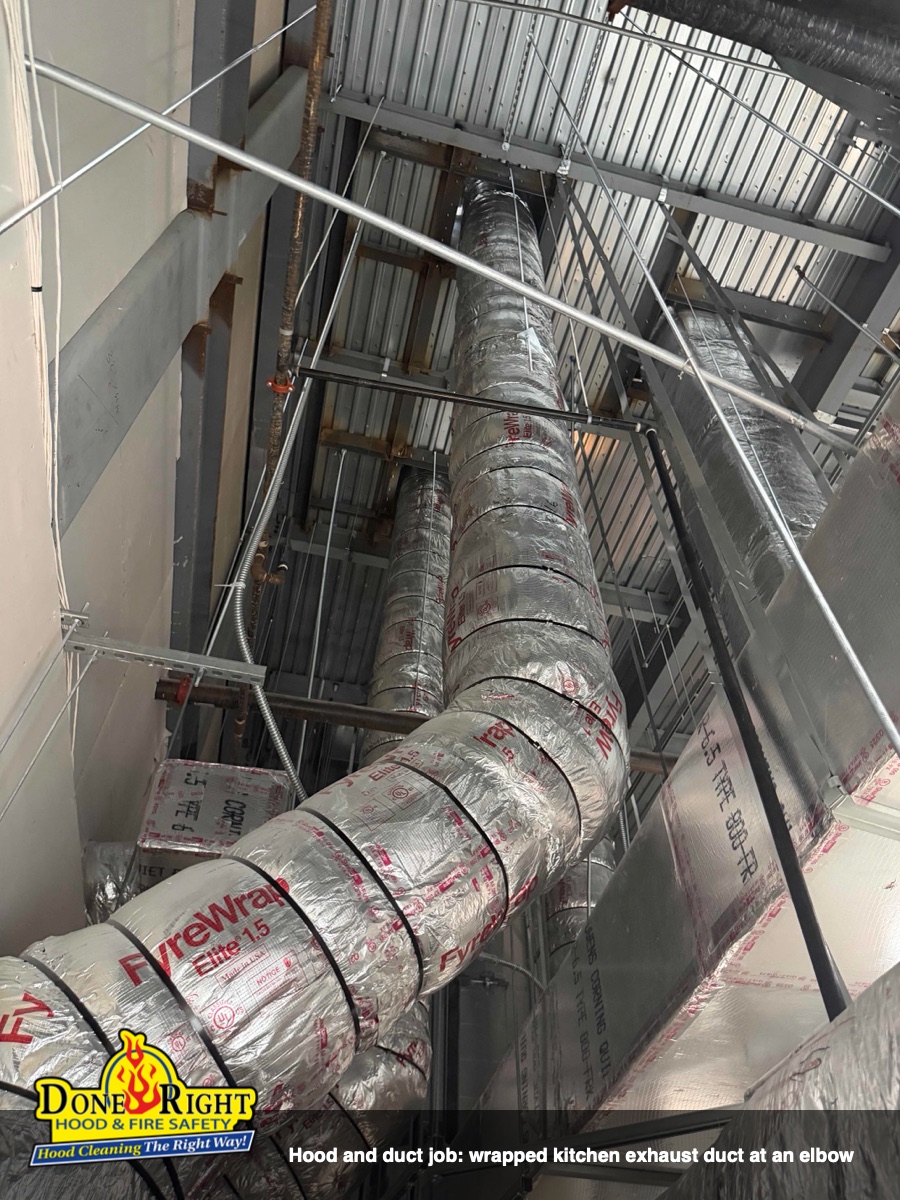
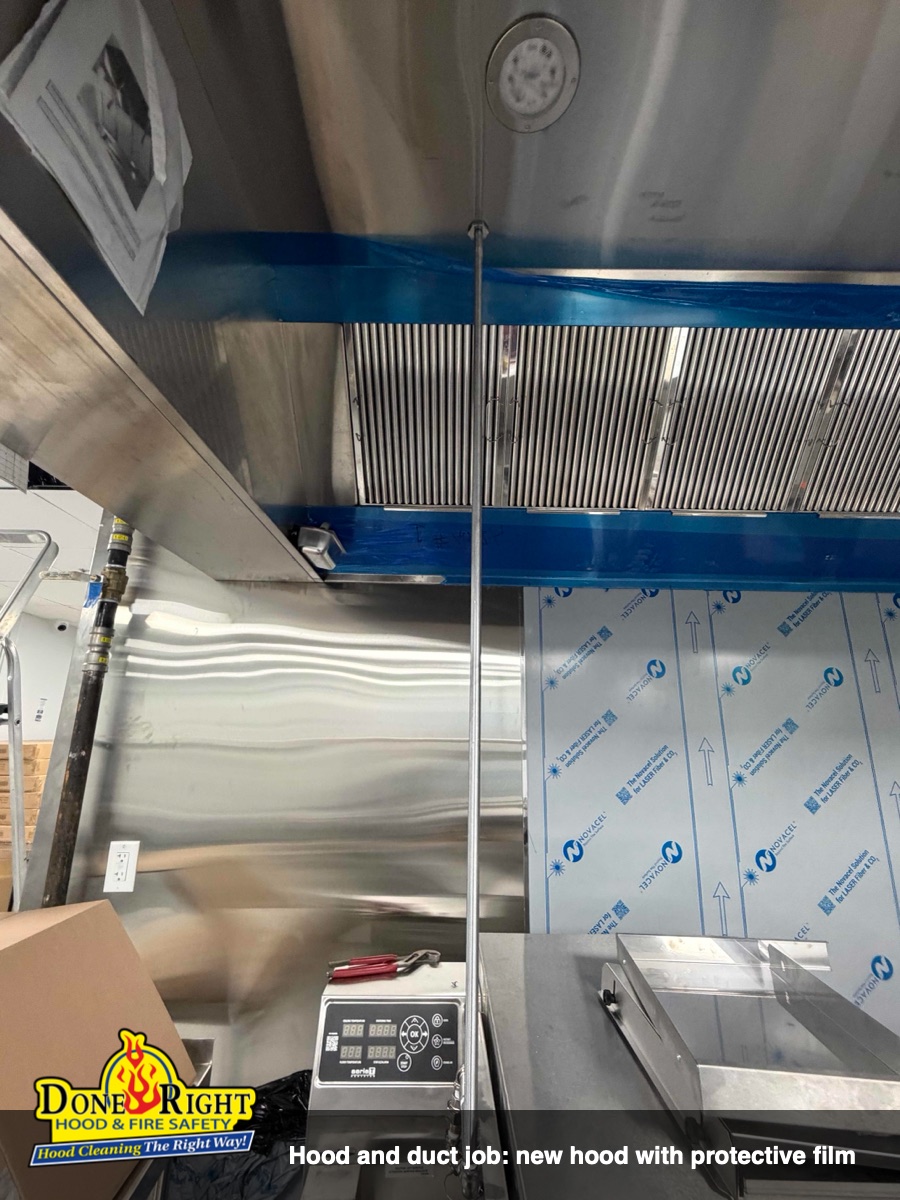
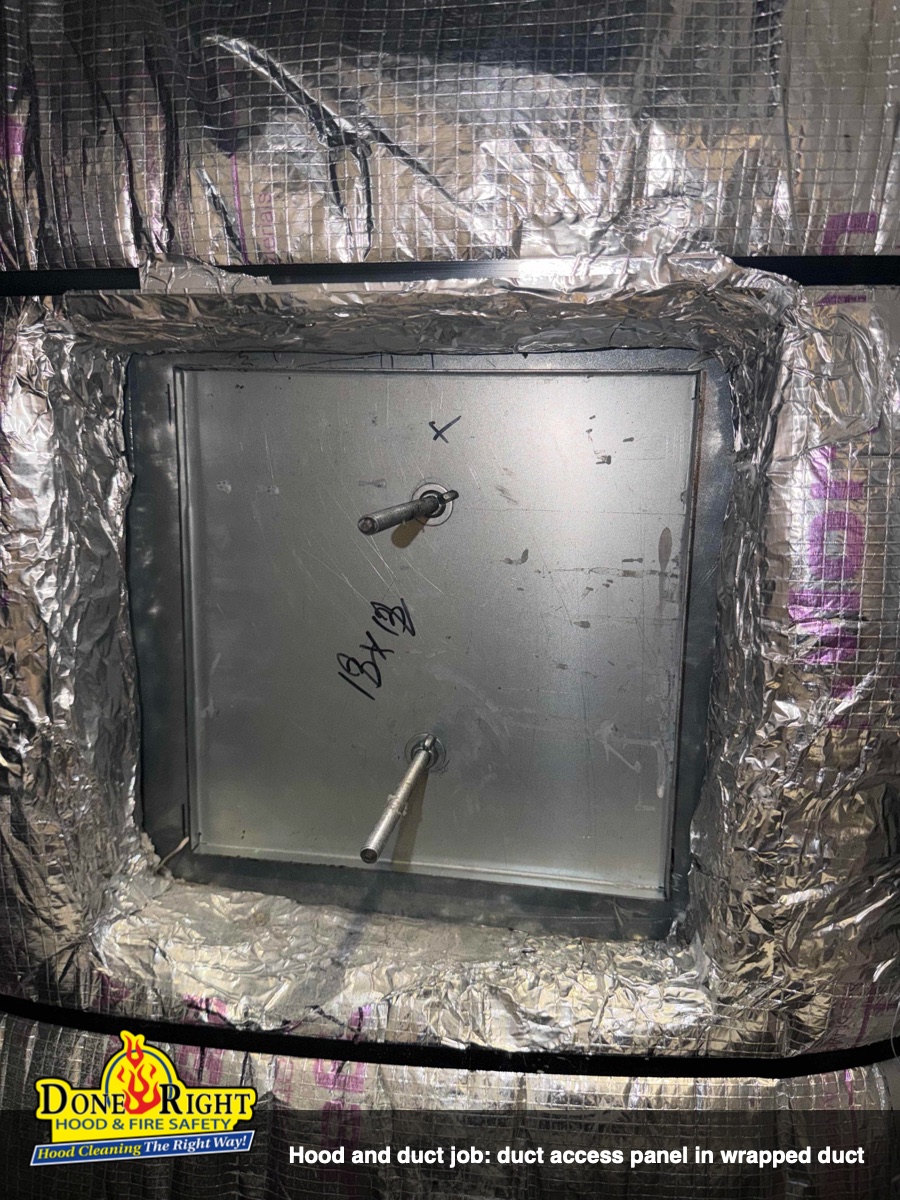
- We set the hood, run the grease duct with fire wrap where the design calls for it, and install the exhaust fan and make-up air.
- The kitchen fire suppression plans are filed after the mechanical plans are approved.
- The suppression system goes in with your appliances in place, so it’s laid out over the equipment you’ll actually cook on.
- We pretest the system ourselves before the fire department comes out.
- The fire department tests the suppression system.
- You get a hand-off packet with the drawings, equipment specs and instructions.
What Florida code asks of a new hood system
- Under the Florida Building Code, a Type I grease hood is required wherever cooking appliances produce grease or smoke.
- Grease ducts must be at least 16-gauge steel, or 18-gauge stainless steel, with continuous liquid-tight welded or brazed seams.
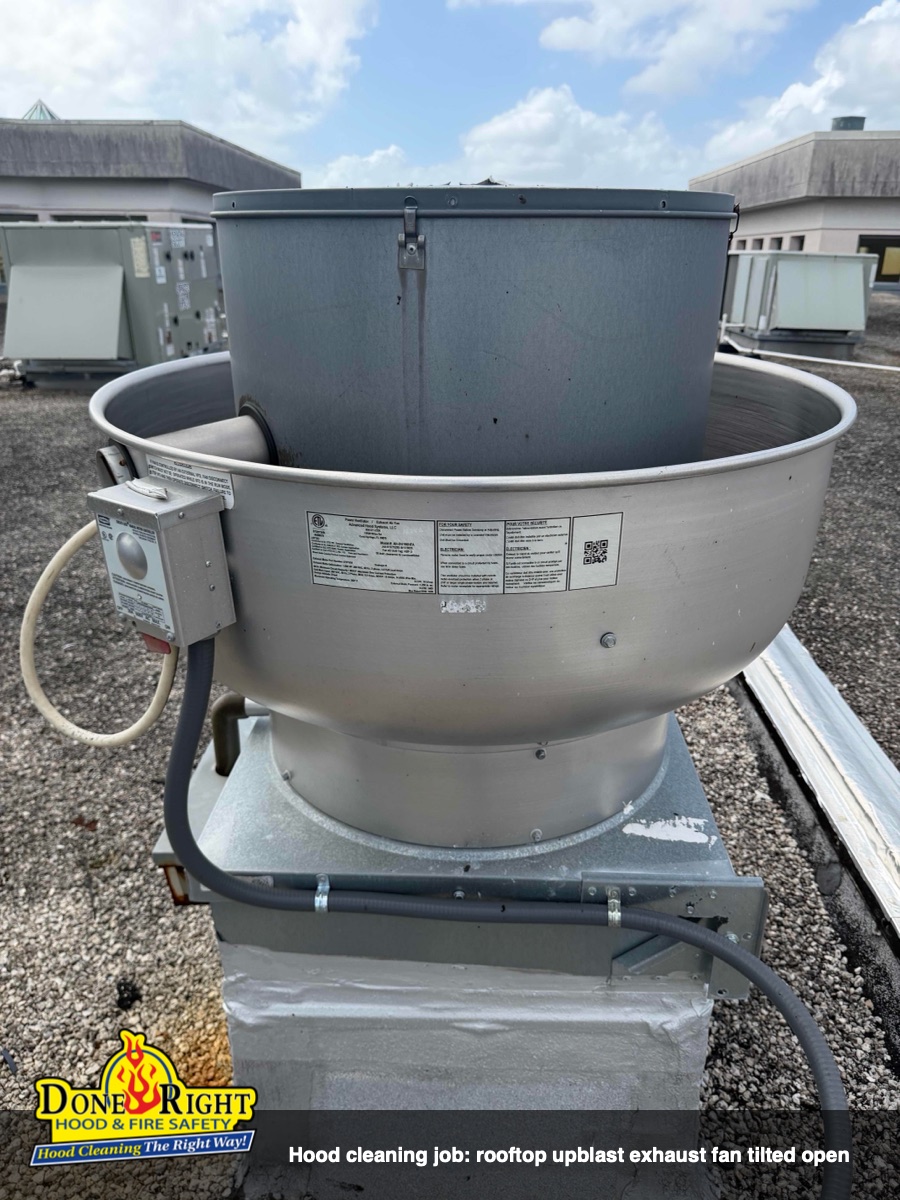
- Grease ducts serving Type I hoods must discharge at least 40 inches above the roof, and upblast fans serving them must be hinged.
- Florida’s mechanical code requires make-up air whenever a commercial kitchen exhaust system runs, in an amount roughly equal to the air being exhausted. Checking that balance after you open is covered under kitchen air balance.
- A new commercial kitchen ventilation system gets a performance test verifying its exhaust and make-up airflow before final approval.
- Pre-engineered wet and dry chemical systems that protect commercial cooking must be tested to UL 300.
- The suppression system needs a manual pull station at or near an exit path from the cooking area, and it must automatically shut off fuel or electric power to the cooking equipment, with a manual reset.
Code references are to the Florida Building Code, 8th Edition (2023), in effect since December 31, 2023.
Permits and inspections by county
Every city runs its own process, and who inspects your kitchen depends on where the address sits. These basics shape a schedule.
Broward County
- Fire department tests of suppression systems are completed before the final structural inspection and the certificate of occupancy.
- In Fort Lauderdale, every permit application has gone through LauderBuild, the city’s online permitting system, since January 1, 2024. A Certificate of Occupancy is issued only after both fire and building inspections pass.
- If you’re re-roofing in Fort Lauderdale, relocating or replacing rooftop mechanical equipment needs a mechanical permit, and a new curb or stand needs engineer-sealed attachment plans.
Miami-Dade County
- Miami-Dade Fire Rescue serves unincorporated Miami-Dade and 29 municipalities, while the City of Miami, Miami Beach and Hialeah run their own fire prevention offices.
- The City of Miami and Miami Beach both require contractors to register before working there.
- Miami Beach’s fire permitting FAQ says a hood test needs a signed and sealed test and balance report, so plan for it early.
Palm Beach County
- Permits are submitted, reviewed and issued by your local building department. Where Palm Beach County Fire Rescue serves, its Plans & Construction Branch handles fire plan review and construction inspections.
- Boca Raton, Boynton Beach, Delray Beach, West Palm Beach and the Town of Palm Beach run their own fire service.
- Palm Beach County’s local fire code amendments don’t allow residential cooking equipment in commercial occupancies.
- Palm Beach County Fire Rescue’s inspection handout, under kitchen suppression systems, tells owners to make sure kitchen equipment is placed in the designed position. Tell us before you rearrange the line.
What your other trades handle
We handle the hood, grease duct, exhaust fan, make-up air and the kitchen fire suppression system. Your other trades handle the gas valve and the electrical tie-ins, unless you add those to our scope.
Line them up early, since the gas valve and the electrical tie-ins are part of how the suppression system shuts the cooking line down when it goes off.
Taking over a second-generation space
A space with a hood already in it can be a head start. Before you count on it, we check:
- Whether the hood covers your new appliance line-up.
- The suppression system’s last service tag and report, and whether it was laid out for appliances like yours.
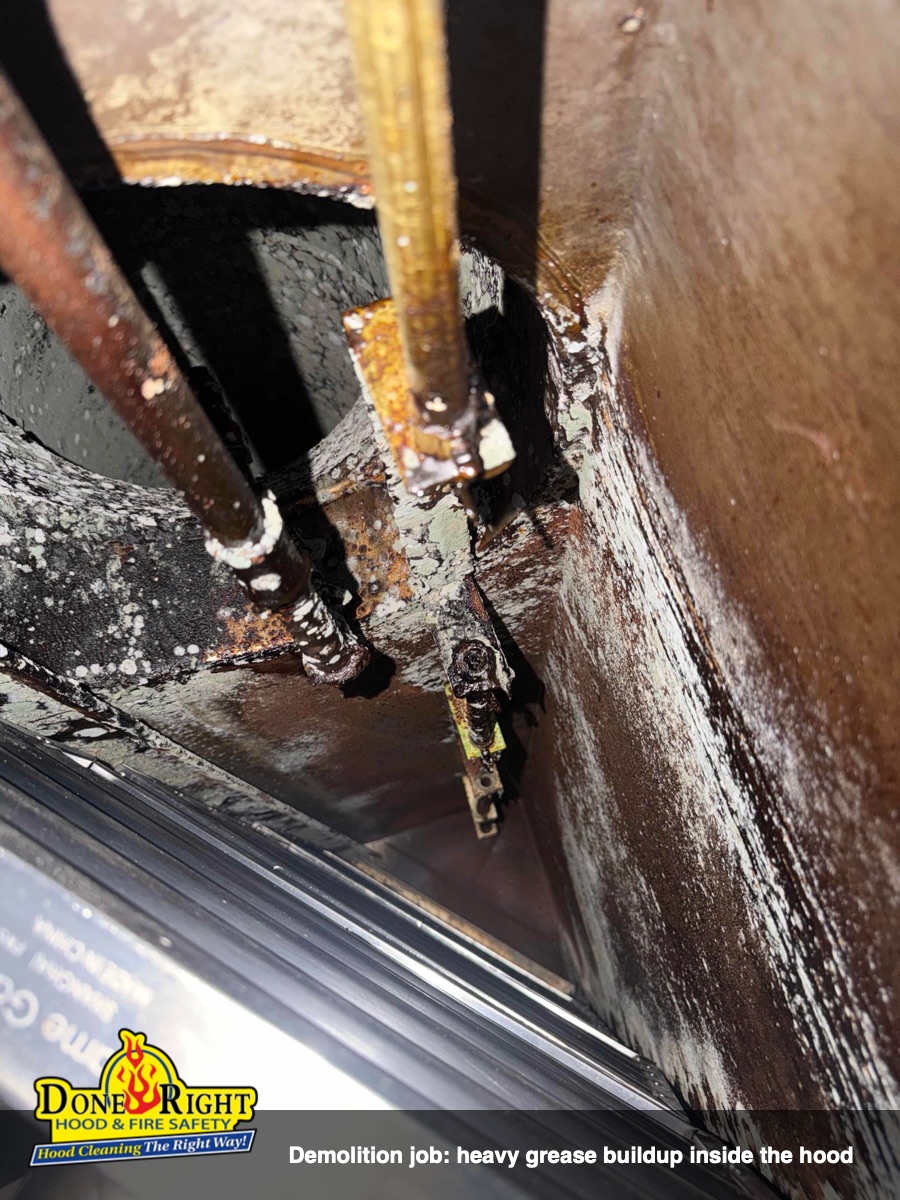
- The condition of the duct and rooftop fan, any grease buildup and how the duct ends on the roof.
- Whether there is any make-up air, and whether it works.
- The drawings, tags and reports the last tenant left behind.
Call us before you sign or order equipment. We’ll tell you what can be reused, what needs cleaning or service and what has to change. More in our second-generation space checklist.
How long it takes
Dates depend on plan review, equipment delivery and inspection calendars, so we don’t promise them. Review time depends on your building department, and the fire department tests on its own schedule. The order stays the same as in the steps above, with the mechanical plans and approval first and the suppression system once your appliances are set.
You can keep things moving on your side: a final appliance list early, equipment delivered on time, and gas and electrical tie-ins ready when the suppression system is. If you’re opening in Broward, see the permit steps for a new restaurant.
One company before and after opening day
- Installs with the city filing handled for you.
- Licensed by the Florida Division of State Fire Marshal to service, repair, install and inspect pre-engineered kitchen fire suppression systems.
- A CaptiveAire TANK certified technician on staff.
- Emergency repairs, with rapid response across South Florida from our Plantation office.
- Electrostatic precipitators (pollution control units): few companies are licensed to service them, and we do.
- 5-star rated on Google, with a staffed office in Plantation.
- After opening, the same company keeps the kitchen running with hood cleaning, semiannual suppression inspections, filter exchange and exhaust fan maintenance. You keep one person to call and one person coordinating the visits, so the kitchen keeps cooking and earning.
Hood installation questions we hear
Does my restaurant hood installation need a Type I hood?
Under the Florida Building Code, a restaurant hood installation needs a Type I grease hood wherever cooking appliances produce grease or smoke. Send us your appliance list and we’ll tell you what the hood has to cover.
Why does the kitchen fire suppression system go in after the hood?
The kitchen fire suppression plans are filed after the mechanical plans are approved, and the system goes in with the appliances in place, so it’s laid out over the equipment you’ll actually cook on.
What do my other trades need to handle in a restaurant hood installation?
On a restaurant hood installation, your other trades handle the gas valve and the electrical tie-ins, unless you add those to our scope. We handle the hood, grease duct, exhaust fan, make-up air and the kitchen fire suppression system.
Can we reuse the kitchen hood that’s already in the space instead of a new hood installation?
Sometimes the existing kitchen hood can stay. We check the hood, the duct and rooftop fan, and the make-up air. We also look at the suppression system with its last tag and report, and at the paperwork the last tenant left. Then we tell you what can stay and what has to change.
How long does a restaurant hood installation take?
How long a restaurant hood installation takes depends on plan review, equipment delivery and the fire department’s schedule, so we won’t promise a date. The order is set: mechanical plans and approval first, then fabrication and install. The suppression plans are filed after mechanical approval, and the suppression system goes in with the appliances in place. Then come the pretest, the fire department test and the hand-off packet.
What has to happen with the restaurant hood installation before we get a certificate of occupancy?
For a restaurant hood installation, the new commercial kitchen ventilation system gets a performance test verifying its exhaust and make-up airflow before final approval. In Broward County, fire department tests of suppression systems are completed before the final structural inspection and the certificate of occupancy.
Call (954) 399-6161
Tell us the address, the size of the space and your appliance line-up. If you have a floor plan or drawings, send them along. We’ll walk you through what your kitchen needs and the order it happens in.
Call (954) 399-6161 or email office@donerighthfs.com. Our office is at 6600 NW 16th Street, Suite 11, Plantation, FL 33313.
Sources
- https://up.codes/viewer/florida/fl-mechanical-code-2023/chapter/5/exhaust-systems
- https://up.codes/viewer/florida/fl-building-code-2023/chapter/9/fire-protection-and-life-safety-systems
- https://www.floridabuilding.org/c/default.aspx
- https://myfloridacfo.com/docs-sf/state-fire-marshal-libraries/sfm-documents/bfp/local-amendments/broward-county-2025.pdf
- https://www.fortlauderdale.gov/Government/Departments/Development-Services/LauderBuild
- https://www.fortlauderdale.gov/Government/Departments/Fire-Rescue/Services-Resources/Fire-Prevention-Bureau
- https://www.fortlauderdale.gov/files/assets/public/v/1/development-services/documents/docs-forms/rooftop_equip_affidavit.pdf
- https://www.miamidade.gov/global/fire/about-fire-rescue.page
- https://www.miami.gov/My-Government/Departments/Fire-Rescue/Fire-Prevention-Bureau
- https://www.miamibeachfl.gov/city-hall/fire/fire-prevention/building-inspections/
- https://www.hialeahfl.gov/240/Fire-Prevention
- https://www.miami.gov/Permits-Construction/Remodeling-and-Construction/Register-as-a-Building-Contractor
- https://www.miamibeachfl.gov/city-hall/building/contractors/
- https://www.miamibeachfl.gov/city-hall/fire/fire-permitting-faq/
- https://discover.pbc.gov/pbcfr/CRRD/Pages/Plan-Review.aspx
- https://discover.pbc.gov/pbcfr/Pages/Area-Served.aspx
- https://myfloridacfo.com/docs-sf/state-fire-marshal-libraries/sfm-documents/bfp/local-amendments/palm-beach-county-2024.pdf
- https://discover.pbc.gov/pbcfr/CRRD/Documents/Keys%20to%20Passing%20your%20Fire%20Safety%20Inspection.pdf