Kitchen Air Balance Check for South Florida Restaurants
By Done Right Hood & Fire Safety of So. Florida
It’s three in the afternoon. The AC has been running since you unlocked the door, and the dining room still feels sticky. The back door slams every time someone lets go of it. Your electric bill went up again, and your HVAC tech says the unit is fine.
The tech may be right. Your kitchen hood may be pulling hot, humid air into the building, and the AC has to cool all of it.
Our kitchen air balance check measures how much air your hood pulls out of the building and how much comes back in. We fix what we find on the exhaust side and put the results in writing, for you and for your HVAC contractor.
How a kitchen hood can pull hot, humid air into your dining room
Your hood fan pushes a lot of air out of the building. That air has to be replaced from somewhere.
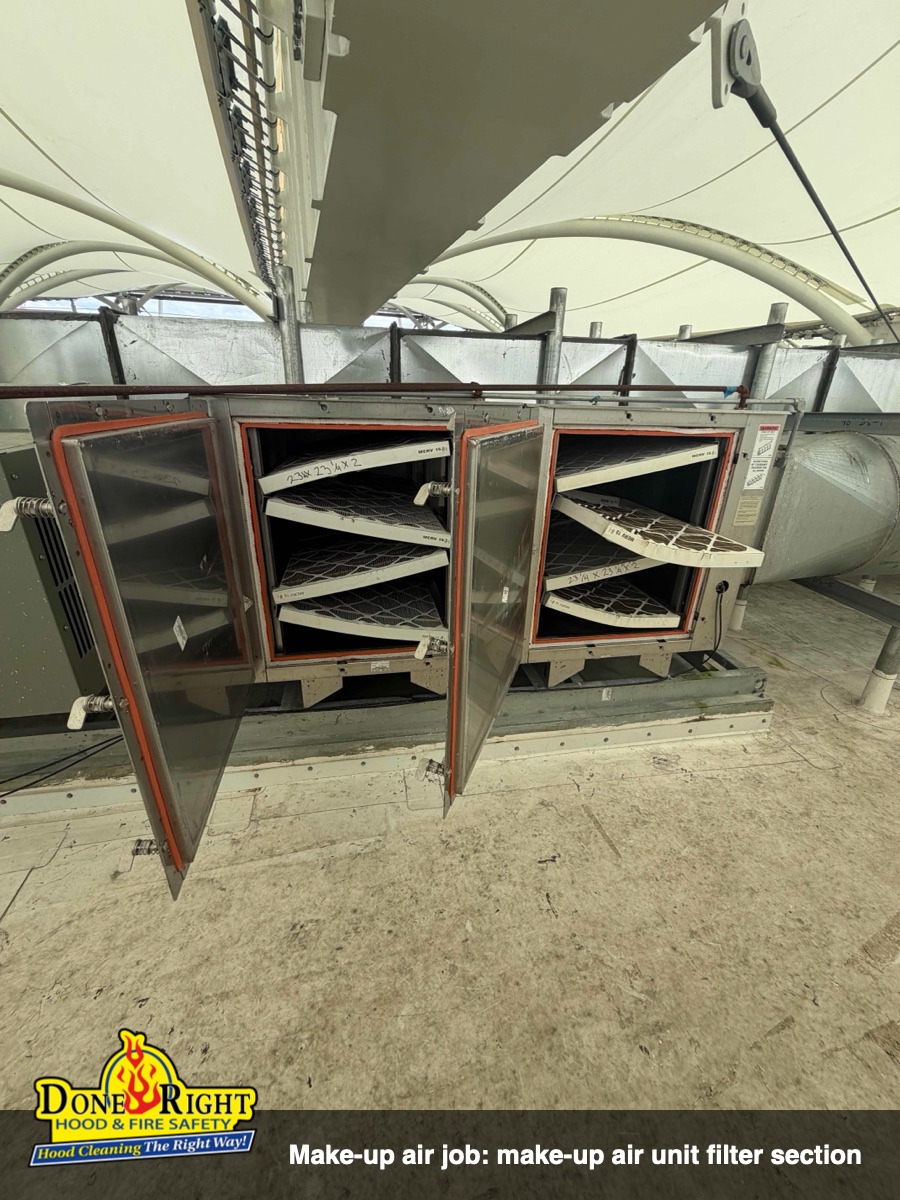
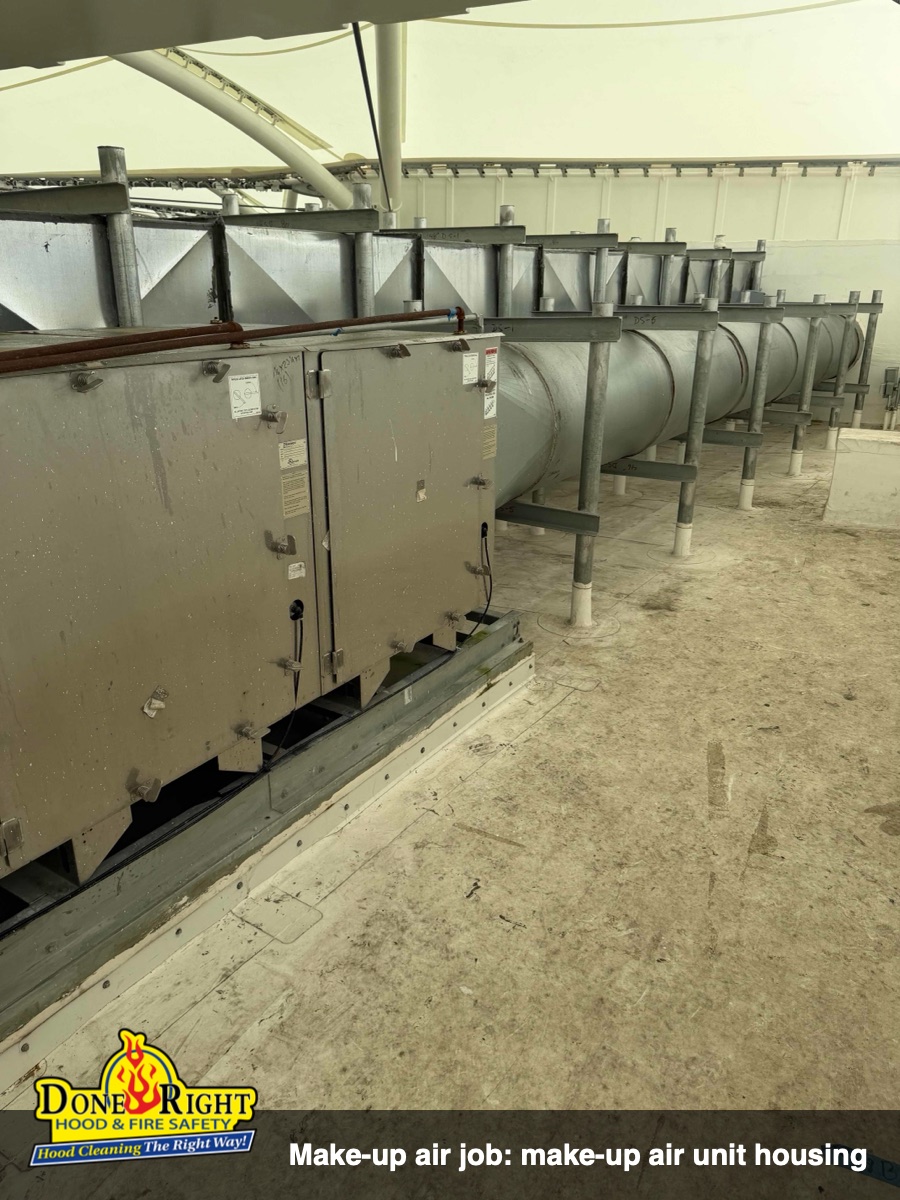
The planned way is make-up air, which is outside air brought in on purpose to replace what the hood removes. Florida’s mechanical code requires make-up air roughly equal to what your kitchen hoods exhaust.
When make-up air falls short, the hood pulls the building into negative pressure. Outside air gets drawn in through doors and gaps. In South Florida, that outside air is warm and humid. Broward, Miami-Dade and Palm Beach counties are in Florida’s warm-humid climate zone.
Your AC then has to cool that air and pull the moisture out of it, for as long as the hood runs.
In field tests published in the 1990s, Florida Solar Energy Center (FSEC) researchers found every restaurant they tested running under negative pressure. They linked the pressure problems to energy use, comfort, humidity, moisture damage, and mold and mildew. Their causes included big exhaust fans and missing or undersized make-up air. Outdoor air that shuts off when the AC cycles and dirty make-up air filters were on the list too.
Restaurants also start with a big energy load. ENERGY STAR says restaurants use about five to seven times more energy per square foot than other commercial buildings. The federal government’s 2018 survey of commercial buildings found that food service buildings used more energy for cooling per square foot than any other type.
Hood manufacturer guidance for a balanced building is to keep the kitchen slightly negative and the rest of the building slightly positive, so doors open easily and dust and bugs stay outside. For restaurants in hot, humid climates, FSEC researchers recommend positive building pressure most of the time, with air moving from the dining room toward the kitchen. They also recommend humidity under 60% most of the time.
Signs your kitchen air is out of balance
Any one of these can have another cause. A balance check confirms it with measurements.
- A front or back door is hard to open, slams, or gets pulled shut once the hoods are on.
- You feel a draft at the entrance.
- Smoke or steam rolls out past the edges of the hood.
- Cooking smells drift into the dining room or the bar, which can mean air is flowing the wrong way.
- Vents sweat, ceiling tiles turn wet or stained, or the floor by the entrance stays damp. That can mean humid outside air is being pulled in.
- The AC runs all afternoon and the dining room still feels warm or sticky.
Five checks you can do tonight, no tools needed
- With the hoods running, open the front door. Does it pull hard, or swing shut on its own?
- During the dinner rush, watch the edges of the hood. Is smoke escaping into the kitchen?
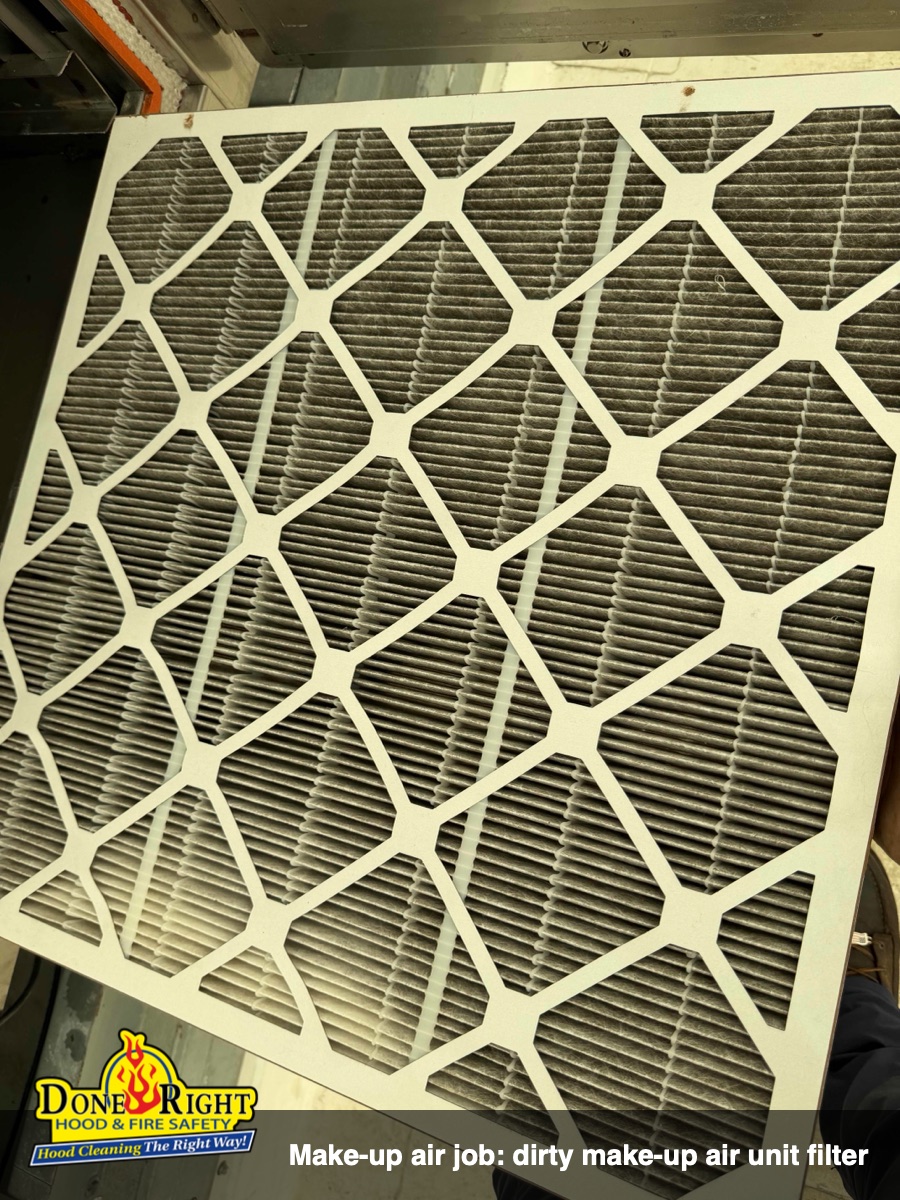
- Hold your hand near the make-up air outlets by the hood while it runs. Do you feel air coming out? If you don’t, the cause can be a closed damper, a tripped breaker, clogged filters or a loose or missing belt.
- Look up. Are there sweating vents or stained ceiling tiles?
- Check the date on your AC filter. ENERGY STAR suggests changing HVAC filters at least every three months.
Write down what you saw and when, and tell us when you call.
What our kitchen air balance check involves
We look at the whole loop, from the air going out through the hood to the air coming back in and what the building does in between.
- We measure how much air your hood pulls out.
- We measure how much make-up air comes back in while the hood runs.
- We check whether the building is running negative, and by how much.
- A smoke check at the hood edges shows whether the hood holds its smoke.
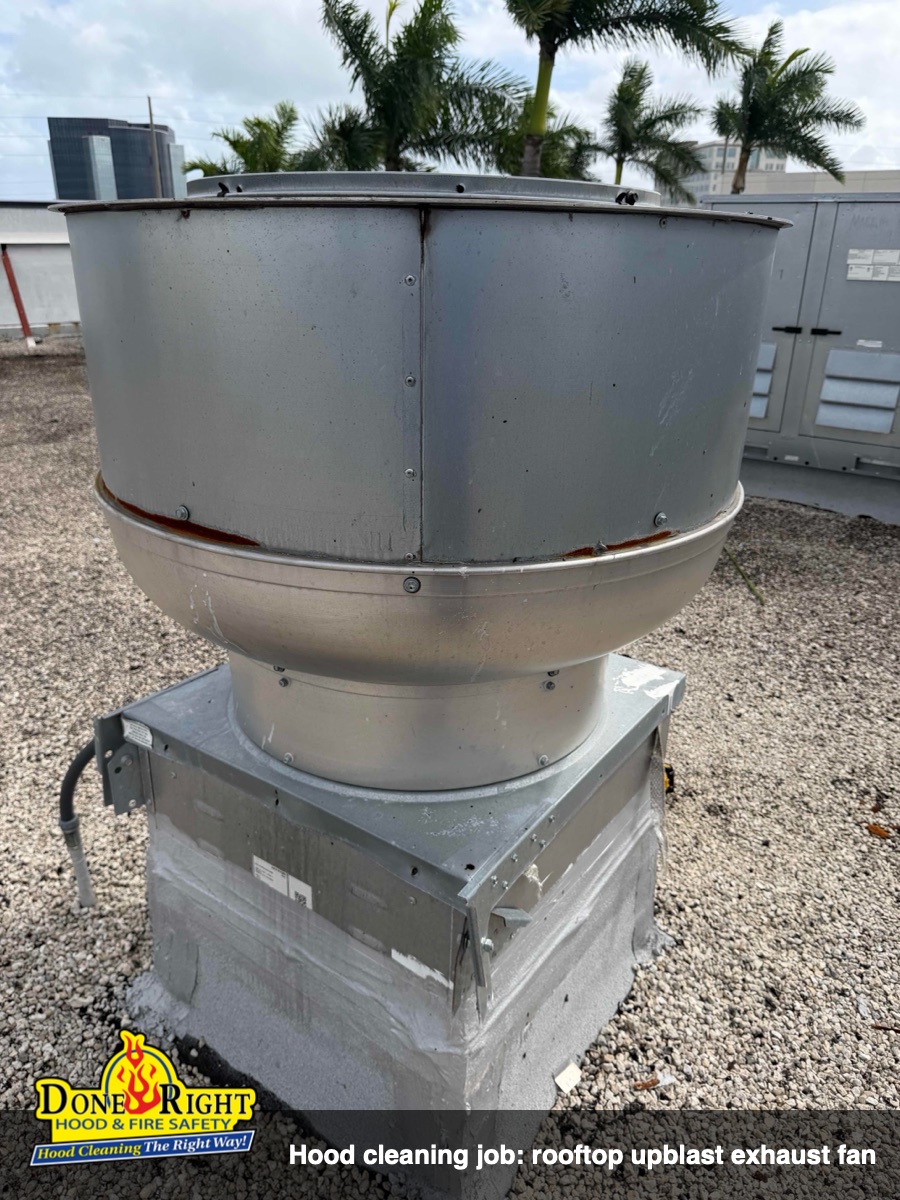
- We check belts, hood filters and fan speed, the parts that change airflow.
- When your mechanical drawings or hood paperwork are available, we compare what we measured with what the system was designed to do.
If you’re building a new kitchen, a new hood system gets a performance test, including a smoke test of hood capture, before final approval. See restaurant hood installation.
What we fix, and what goes to your HVAC contractor
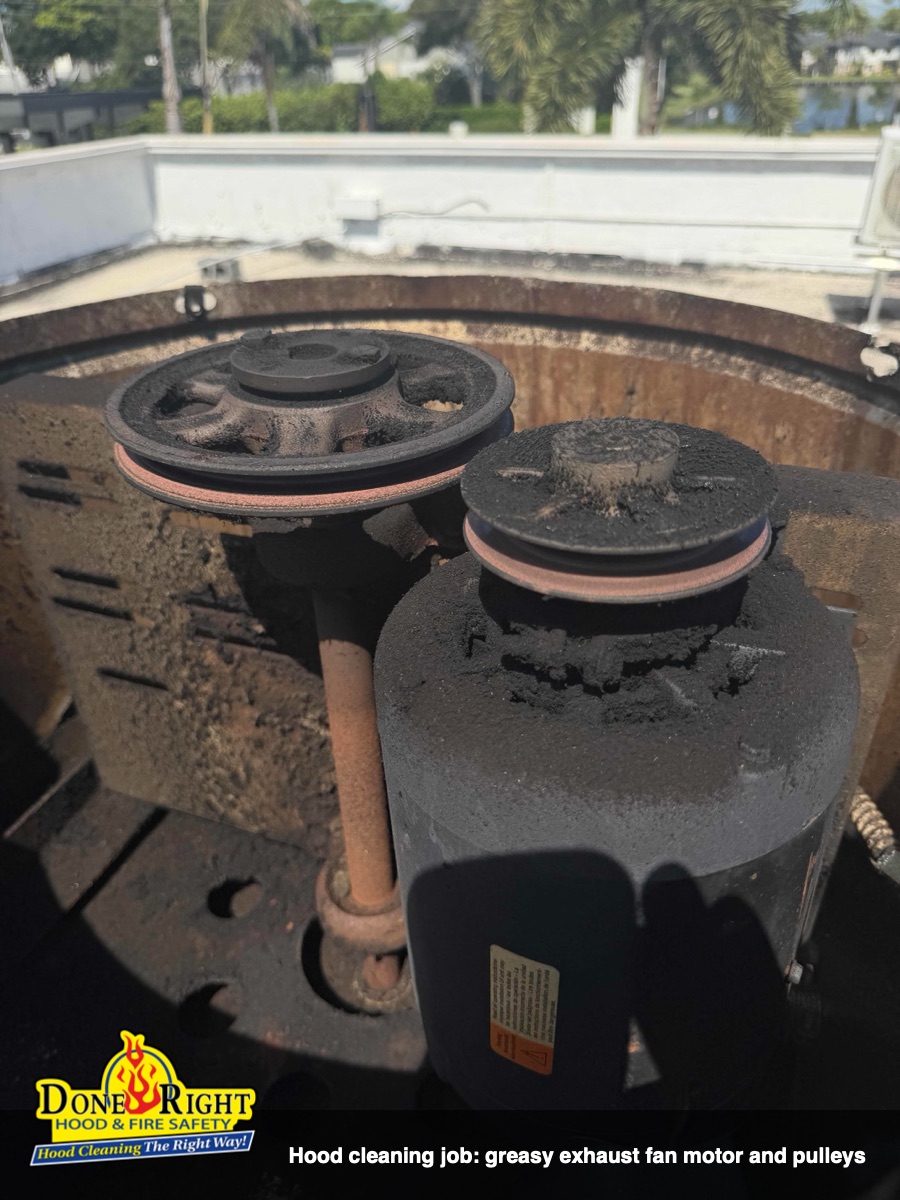
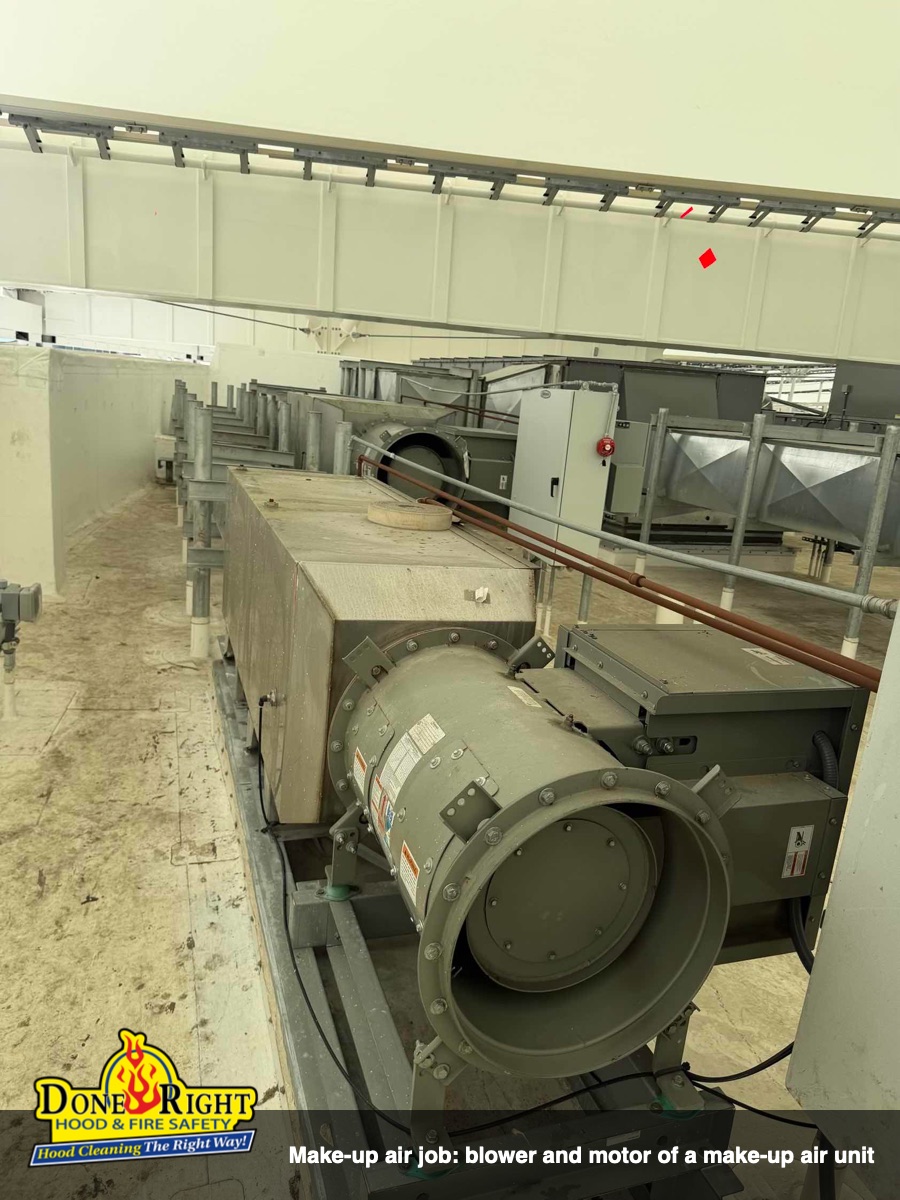
We fix the exhaust side of the loop. That means worn or slipping belts, clogged or missing hood filters and an exhaust fan running at the wrong speed. These change how much air leaves the building, so we start there. Make-up air units are part of our maintenance and repair work too, so a slipped belt or a clogged filter there is something we can fix.
The AC side goes to your HVAC contractor, in writing. If the problem is in the AC units, their settings or the ductwork that feeds your dining room, we write down what we measured and what we found. Your contractor starts from our measurements.
We won’t promise a percentage off your bill.
Every building, menu and schedule is different, and we haven’t measured yours yet. What you get, in writing:
- how much air your hood pulls out, and how much make-up air comes back in
- whether your building is running negative
- whether the hood captures its smoke
- what we fixed on the exhaust side
- what’s off on the AC side, for your HVAC contractor
If nothing is off, we’ll tell you that too, so you can look elsewhere.
Ask FPL for its free Business Energy Evaluation
If FPL is your electric company, it offers business customers a free Business Energy Evaluation with a customized, no-cost report. FPL also offers rebates on qualifying higher-efficiency HVAC equipment, and restaurants are among the eligible businesses. That’s worth knowing if an AC unit is due for replacement anyway.
These are FPL’s programs, so ask FPL about them directly. Our check covers the kitchen exhaust and make-up air side.
ENERGY STAR also suggests turning hoods off when the appliances under them aren’t being used.
When demand-controlled ventilation is worth asking about
Demand-controlled kitchen ventilation uses sensors to watch the cooking and adjust the exhaust fan speed to match. How much it saves depends on your hours and how long the hoods sit idle. It isn’t a good fit for every small kitchen.
It’s worth asking about for hoods that run from open to close, with long quiet stretches between rushes. A small hood that runs a few hours a day is probably not a good candidate.
Ask during your check and we’ll tell you whether your kitchen is a candidate.
Code references on this page are to the Florida Building Code, 8th Edition (2023), in effect since December 31, 2023.
One company for the check, the cleaning and the inspections
- Our everyday work is hood and duct cleaning, kitchen fire suppression inspections and preventive maintenance. That covers exhaust fan, belt and motor repairs and make-up air maintenance.
- The air balance check comes from the same company, so you have one person to call and one person coordinating it with your cleaning and inspections, and the kitchen keeps cooking. If you’re already on a hood cleaning schedule with us, ask about adding the check to a visit. You can also see our done-all-at-once kitchen visit.
- Emergency repairs, with rapid response across South Florida from our Plantation office.
- Installs with the city filing handled for you.
- Electrostatic precipitators (pollution control units): few companies are licensed to service them, and we do.
- 5-star rated on Google, with a staffed South Florida office in Plantation.
Air balance questions we hear
Why does my restaurant’s AC run all the time? Could it be a kitchen air balance problem?
There are many possible reasons, a kitchen air balance problem among them, and some belong to your HVAC contractor. One to rule out is the kitchen hood. When make-up air falls short, the hood pulls the building into negative pressure, and warm, humid outside air gets drawn in through doors and gaps. An air balance check measures whether that’s happening.
Will a restaurant air balance check lower my electric bill?
We won’t promise a percentage from an air balance check, because we haven’t measured your building yet. We will tell you in writing how much air your hood pulls out, how much make-up air comes back and whether your building runs negative. The write-up also lists what we fixed on the exhaust side and what your HVAC contractor should look at.
What do you fix in a restaurant air balance, and what goes to my HVAC contractor?
In a restaurant air balance, we fix the exhaust side: belts, hood filters and fan speed, plus make-up air unit maintenance and repairs. Anything on the AC side goes to your HVAC contractor in writing, with our measurements.
What can I check myself before I call about restaurant air balancing?
Before an air balance call, check whether a door pulls hard or swings shut with the hoods on and whether smoke escapes the hood edges during a rush. Then check whether you feel air at the make-up air outlets while the hood runs, whether vents sweat or ceiling tiles are stained, and the date on your AC filter.
Should I ask about demand-controlled kitchen ventilation?
Maybe. Demand-controlled kitchen ventilation uses sensors to watch the cooking and adjust the exhaust fan speed to match. How much it saves depends on your hours and how long the hoods sit idle, and it isn’t a good fit for every small kitchen.
Call (954) 399-6161
Tell us what you’re noticing, such as the door, the smoke, the sticky dining room or the bill. Add how many hoods you run and when you’re open, and we’ll set up the check.
Call (954) 399-6161 or email office@donerighthfs.com. Our office is at 6600 NW 16th Street, Suite 11, Plantation, FL 33313.
Sources
- https://up.codes/viewer/florida/fl-mechanical-code-2023/chapter/5/exhaust-systems
- https://stars.library.ucf.edu/fsec/765
- https://www.osti.gov/biblio/392515
- https://www.contractingbusiness.com/iaq-amp-ventilation/comfort-food
- https://www.achrnews.com/articles/164721-the-invisible-hvac-issue-costing-restaurants-and-how-to-fix-it
- https://up.codes/viewer/florida/fl-energy-conservation-code-2023/chapter/CE_3/ce-general-requirements
- https://stars.library.ucf.edu/fsec/742
- https://www.energystar.gov/restaurants
- https://www.eia.gov/consumption/commercial/pba/overview.php
- https://www.captiveaire.com/manuals/hoods/oem/performa.asp
- https://www.captiveaire.com/manuals/hoods/oem/troubles.asp
- https://www.fpl.com/business/save/programs.html
- https://www.fpl.com/business/save/bus-energy-manager-form.html
- https://www.fpl.com/business/save/programs/heating-and-cooling.html
- https://www.achrnews.com/articles/159629-setting-the-payback-parameters-of-a-demand-controlled-kitchen-ventilation-system
- https://achrnews.com/articles/106032-kitchens-benefit-from-demand-ventilation
- https://www.floridabuilding.org/c/default.aspx